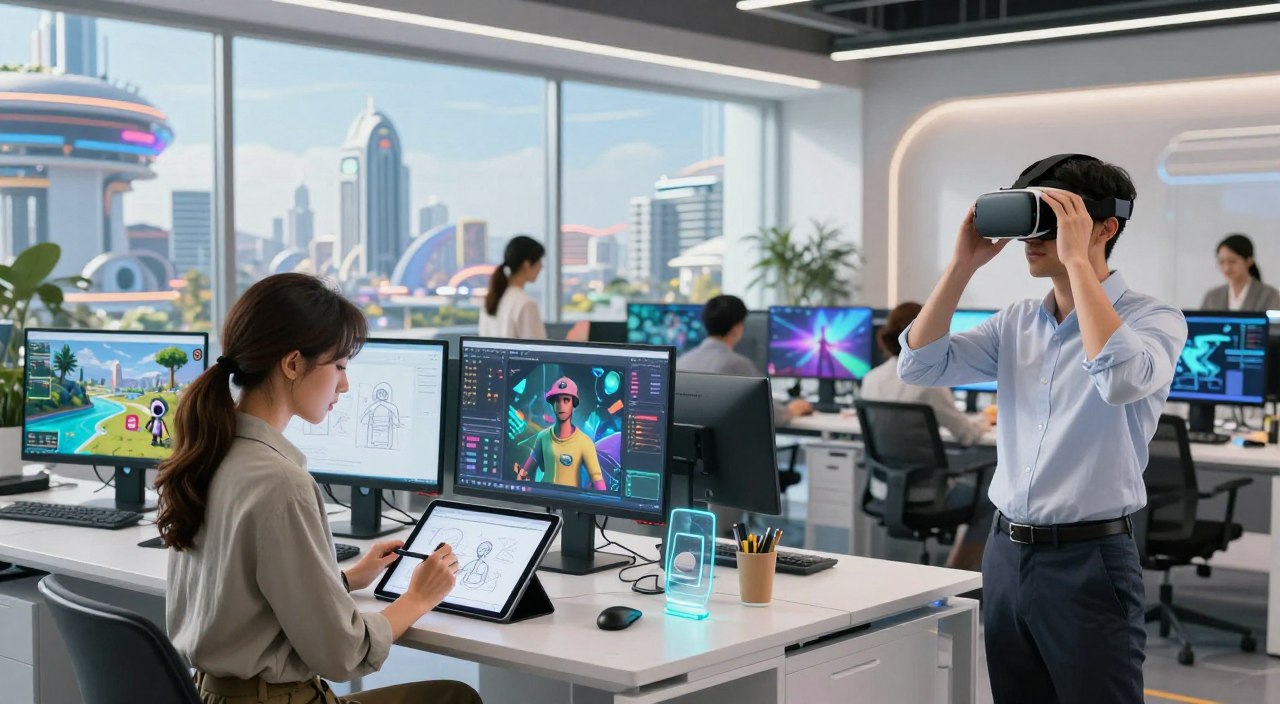
The need for immersive experiences is growing fast. This means more jobs for VR/AR designers. By 2026, many industries will look for experts to make engaging experiences.
VR/AR designers are key as tech gets better. You’ll create new experiences that change industries. You’ll need both tech skills and creativity.
The rise in comes from the growing metaverse. This new world needs creators to build it. So, are becoming a big chance for jobs.
The Current State of VR/AR Design Industry
The VR/AR design industry is growing fast. This is thanks to new tech and more people wanting immersive experiences. The market is getting bigger, and new companies are bringing fresh ideas to the table.
Market Size and Growth Trajectory
The global VR/AR market is growing quickly. As VR/AR tech gets better and cheaper, more people are using it. This is true in gaming, education, and healthcare, helping the market grow fast.
Major Companies Driving Innovation
Big tech companies are pouring money into VR/AR research. Meta, Apple, and Google are leading the charge. They’re making new hardware and software that are changing VR/AR design. Their work is making the tech better and opening up new chances for designers.
Impact of Recent Technological Advancements
New tech in VR/AR is making a big difference. Better resolution, lower latency, and advanced tracking systems are key. Tools like Unity and Unreal Engine are helping designers create more detailed and engaging experiences. This is creating a big need for skilled VR/AR designers who can use these tools to make something new.
Why VR/AR Designer Jobs Are Projected to Skyrocket by 2026
VR/AR designer jobs are set to soar by 2026. The metaverse is growing, and people want more immersive experiences. This means we need skilled designers to make these experiences come to life.
Industry Expansion Factors
Several things are making VR/AR design more popular. New tech lets us create better, more interactive experiences. Also, more industries like gaming, education, and healthcare are using VR/AR. This means more jobs for VR/AR designers.
Metaverse creator roles are key as companies build virtual worlds. Spatial computing designers are in high demand. They make digital and physical worlds work together seamlessly.
Consumer Adoption Rates
More people are using VR/AR, thanks to cheaper headsets and devices. As they get used to these technologies, they want better VR/AR content. This opens up new chances for designers.
The gaming world is a big driver for VR/AR content. Gamers want experiences that feel real and blend the digital and physical.
Enterprise Implementation Trends
Companies are quickly adopting VR/AR for better training, customer experiences, and efficiency. This means more jobs for VR/AR designers who can meet these needs.
Businesses want designers to create experiences that help them succeed. This includes virtual product demos and interactive training.
Essential Skills Required for VR/AR Designer Positions
To succeed in VR/AR design, you need a mix of technical, design, and soft skills. VR/AR technology is growing fast. This means more demand for designers who can make immersive, interactive, and easy-to-use experiences.
Technical Skills
Technical skills are the base for VR/AR designers. Knowing specific programming languages and 3D modeling software is key for making complex VR/AR experiences.
Programming Languages
Knowing programming languages like C#, JavaScript, and Python is vital. For example, Unity uses C# for scripting. Knowing these languages helps you make dynamic and interactive experiences.
3D Modeling and Animation
Skills in 3D modeling and animation are essential. Tools like Blender and Maya are used to create 3D models and animations. Knowing these will help you design more immersive experiences.
Design Skills
Design skills are also critical for VR/AR designers. They need to create user interfaces and interactions that are easy to use and engaging.
UI/UX for Spatial Computing
Designing for VR/AR means understanding UI/UX for spatial computing. This includes making interfaces that look good and are easy to use in 3D space. Tools like Figma and Sketch are helpful for designing UI/UX elements.
Interaction Design Principles
Knowing interaction design principles is key for creating interactive VR/AR experiences. It’s about designing interactions that feel natural and intuitive, improving the user experience.
Soft Skills
VR/AR designers also need soft skills for teamwork and communication.
Key soft skills include creativity, problem-solving, and communication. Being able to work well in a team and adapt to feedback is important. VR/AR projects often require creative problem-solving. Being able to think creatively and outside the box is highly valued.
Educational Pathways to Become a VR/AR Designer
To become a VR/AR designer, you have many educational paths to choose from. These paths cater to different learning styles and career goals. Each path offers unique benefits and opportunities for success in VR/AR design.
Formal Education Options
Many aspiring VR/AR designers choose formal education. They enroll in degree programs in computer science, graphic design, or interactive media. These programs teach the basics of design, programming, and how humans interact with computers.
- Bachelor’s or Master’s degrees in Computer Science with a focus on graphics or human-computer interaction
- Programs in Game Design or Interactive Media that cover VR/AR technologies
- Degrees in Fine Arts or Graphic Design with courses in digital media and VR/AR
Bootcamps and Certification Programs
Bootcamps and certification programs offer specialized training for VR/AR design. They are shorter than traditional degrees and focus on practical skills.
- VR/AR development bootcamps that teach programming languages like C# or JavaScript
- Certification programs in specific VR/AR software or tools, such as Unity or Unreal Engine
- Specialized courses in 3D modeling and animation for VR/AR
Self-Learning Resources
Self-learning is also a great option. There are many online resources, tutorials, and communities for VR/AR development. You can learn at your own pace.
- Online courses on platforms like Udemy, Coursera, or LinkedIn Learning
- YouTube tutorials and developer channels focused on VR/AR
- Community forums and documentation for VR/AR development frameworks
Whether you go for formal education, a bootcamp, or self-learning, becoming a VR/AR designer takes dedication. It also requires continuous learning and a passion for immersive experiences. As VR/AR design evolves, staying updated with new technologies and trends is key for career growth.
Mastering Essential Tools: Unity and Unreal Engine
To make amazing VR/AR experiences, you must know Unity and Unreal Engine well. These engines are key for most VR/AR projects. They offer many features for different parts of development.
Unity vs. Unreal: Which to Learn First
Unity and Unreal Engine each have their own strengths. Unity is great for beginners because it’s easy to use and versatile. Unreal Engine is known for its top-notch graphics.
Think about what you need for your project and what you like. Unity is good for mobile VR/AR because it works on many platforms and has a big asset store. Unreal Engine is best for projects that need stunning visuals. Unity might be easier to start with because it’s more straightforward.
Essential Features for VR/AR Projects
Some features are key for VR/AR projects. Unity has tools like the XR Interaction Toolkit and supports many VR/AR devices. Unreal Engine has Blueprints for visual scripting and advanced physics.
- Cross-platform support
- Advanced graphics capabilities
- Extensive community and asset stores
- Support for various VR/AR devices
Learning Resources and Communities
To get good at Unity and Unreal Engine, you need the right resources. Both engines have official tutorials and guides. You can also find great learning materials on Udemy and Coursera.
Joining Unity and Unreal Engine forums is a great way to learn from others. It keeps you up-to-date with the latest in VR/AR design.
Advanced Platforms for Spatial Computing Designers
If you’re a spatial computing designer, you know VR/AR tech is changing fast. More people need skilled designers because VR/AR is growing. This growth comes from new platforms that help designers make cool, interactive experiences.
Apple Vision Pro Development
Apple Vision Pro is a big step forward in VR/AR. It gives designers a great place to work on complex projects. Its top-notch tech lets designers explore new VR/AR possibilities.
Meta’s Development Ecosystem
Meta’s tools are key for designers, like those working on Oculus Quest jobs. Meta offers a lot of help, including Unity game engine support.
WebXR and Cross-Platform Tools
Designers who want their work on many devices need WebXR and other tools. These tools help make content for lots of devices, from phones to VR headsets.
Using these platforms, designers can make amazing VR/AR experiences. These experiences meet the growing need for immersive content.
Building a Standout VR/AR Design Portfolio
VR/AR designer jobs are on the rise, making a strong portfolio essential. It’s key to show a mix of projects that highlight your technical skills and creativity.
Essential Projects to Include
Choose projects that show your VR/AR design expertise. Include interactive experiences, 3D modeling, or spatial audio experiments. Also, add case studies to explain your design process and challenges.
“A great portfolio doesn’t just show what you’ve made; it tells the story of how you think, how you problem-solve, and how you push the boundaries of what’s possible in VR/AR,” notes a leading industry expert.
Showcasing Technical and Creative Skills
Your portfolio should balance technical skills, like Unity or Unreal Engine, with creativity. Show your ability to work with different tools and technologies. Also, highlight your skill in crafting compelling narratives or user experiences.
Portfolio Platforms and Presentation
Choosing the right platform for your portfolio is key. Behance, GitHub, or personal websites are good options. Look for ease of navigation, mobile responsiveness, and the ability to embed or link to your projects.
When presenting your work, use clear, concise descriptions. Highlight the goals, processes, and outcomes of each project. Remember, your portfolio is a dynamic showcase of your skills and experiences. Update it regularly with new projects and insights.
VR/AR Designer Jobs: Types and Requirements
The VR/AR industry is growing fast, creating more job opportunities for skilled designers. You can find many roles, from UI/UX design to 3D modeling and animation.
Common Job Titles and Descriptions
Jobs in VR/AR include VR/AR Designer, UI/UX Designer, 3D Modeler, and Animation Specialist. These roles focus on making immersive and interactive experiences. Designers use tools like Unity and Unreal Engine.
A VR/AR Designer might design user interfaces, create 3D models, and test VR experiences. This is often for Oculus Quest jobs.
Day-to-Day Responsibilities
VR/AR Designers have different tasks every day. They design and prototype VR/AR experiences, create 3D models and animations. They also work with teams to complete projects.
Designers test and debug VR/AR experiences. They make sure they work well and are error-free.
Required Experience Levels
VR/AR Designer jobs need 2-3 years of experience. Some jobs require experience with Unity or Unreal Engine. Senior roles need 5+ years of experience and a strong portfolio.
Collaboration with Other Team Members
VR/AR Designers work with developers, artists, and project managers. Good teamwork is key to creating top-notch VR/AR experiences. They work together to meet goals and deadlines.
Designers might help developers with design elements, artists with 3D models and textures, or project managers with schedules and budgets.
Specializations Within the Metaverse Creator Roles
The metaverse is growing, and so are the roles within it. We see a rise in VR/AR UX and 3D asset creation. This growth opens doors for designers to specialize, leading to new innovations and immersive experiences.
Spatial Computing Designer Paths
Spatial computing designers lead in making the metaverse interactive and immersive. They design interfaces and experiences that are easy to use and fun.
VR/AR UX Specialist
VR/AR UX specialists are key in making virtual and augmented reality easy to use. They ensure interactions are smooth and effective.
3D Asset Creation and Management
Creating and managing 3D assets is essential for the metaverse. Experts in this field make high-quality 3D models, textures, and animations.
Virtual Environment Architect
Virtual environment architects build the metaverse’s worlds and environments. They focus on design and user experience, making spaces both beautiful and functional.
| Specialization | Key Skills | Responsibilities |
|---|---|---|
| Spatial Computing Designer | Proficiency in spatial computing tools, UX design principles | Designing spatial interfaces, creating interactive experiences |
| VR/AR UX Specialist | Knowledge of VR/AR technologies, UX design expertise | Crafting intuitive user experiences in VR/AR |
| 3D Asset Creator | Skill in 3D modeling, texturing, and animation | Creating high-quality 3D assets for the metaverse |
| Virtual Environment Architect | Understanding of spatial design, UX principles | Designing immersive worlds and environments |
The metaverse is more than just tech; it’s a new world for creators. As it grows, so will the need for specialized roles. This will push the metaverse forward with innovation and immersive experiences.
Top Companies Hiring for Oculus Quest Jobs and Beyond
Oculus Quest jobs are in high demand. Tech giants and startups are looking for the best VR/AR design talent. As VR evolves, many companies want skilled professionals to create immersive experiences.
Tech Giants
Major tech companies lead in VR/AR innovation. Meta, Apple, and Google are hiring VR/AR designers. They aim to develop top-notch experiences for their platforms.
- Meta: Focused on building the metaverse, Meta hires designers for Oculus Quest and other VR projects.
- Apple: With its entry into VR, Apple seeks talented designers to create innovative AR/VR experiences.
- Google: Google’s VR initiatives include hiring designers for various VR/AR projects.
Gaming and Entertainment Studios
Gaming and entertainment companies also hire VR/AR designers. These studios make immersive games and experiences for Oculus Quest.
| Company | Focus | VR/AR Roles |
|---|---|---|
| Electronic Arts | Gaming | VR Game Designer |
| Unity | Game Engine Development | AR/VR Experience Designer |
| Blizzard Entertainment | Gaming | VR Content Creator |
Enterprise Solutions Providers
Companies providing enterprise solutions are using VR/AR for training and business apps. This creates a need for skilled VR/AR designers.
Startups and Innovation Labs
Startups and innovation labs are also key players in the VR/AR job market. They often explore new possibilities in VR/AR design.
How to Land VR/AR Designer Jobs in a Competitive Market
To succeed as a VR/AR designer, you must stand out in a crowded field. The demand for VR/AR tech is growing, making the competition fierce. To get your dream job, show a mix of technical, design, and soft skills.
Crafting a Specialized Resume
Your resume is your first chance to impress employers. Make it unique by focusing on VR/AR experience and skills. List specific projects, technologies used, and any certifications or training.
- Highlight your skills in VR/AR development platforms like Unity or Unreal Engine.
- Include examples of your 3D modeling and animation skills.
- Mention any experience with XR devices and software.
Interview Preparation and Common Questions
Getting ready for VR/AR designer interviews means knowing both tech and soft skills. Look up common questions, like solving problems in VR/AR or using user-centered design.
Be ready to talk about your portfolio and past project challenges. Practice explaining complex tech in simple ways.
Technical Assessments and Challenges
Many companies test your skills with technical assessments. These might be coding challenges, design exercises, or projects to complete at home. Show your skills in real-world scenarios.
Networking in the XR Community
Networking is key in the VR/AR world. Go to conferences, join online forums, and connect on LinkedIn. Take part in hackathons or community projects to grow your network and get noticed.
With a strong resume, good interview prep, and networking, you can boost your chances of getting a VR/AR designer job.
Salary Expectations and Career Progression
Career growth and salary for VR/AR designers depend on their skills and experience. Knowing what affects salaries is key for making smart career choices.
Entry-Level to Senior Position Salaries
VR/AR designer salaries change with experience. Beginners start at $60,000-$80,000 a year. Those with skills in Unity and Unreal Engine can make $120,000-$150,000 or more.
- Entry-level: $60,000-$80,000
- Mid-level: $90,000-$120,000
- Senior: $120,000-$150,000+
Geographic Salary Variations
Where you work also affects your salary. Cities like San Francisco and New York pay more than other places.
| Location | Average Salary Range |
|---|---|
| San Francisco, CA | $100,000-$140,000 |
| New York, NY | $90,000-$130,000 |
| Other regions | $60,000-$100,000 |
Career Advancement Opportunities
As a spatial computing designer, you can grow in many ways. You might lead teams, focus on VR/AR UX design, or explore 3D asset creation.
Improving your skills in Unity and Unreal Engine is important. Staying updated with industry trends will help you succeed and grow in VR/AR design.
Real-World Applications Driving Demand Through 2026
VR/AR designers are in high demand as real-world applications grow. This change is transforming the job market. Many industries are using VR/AR to innovate and improve.
Consumer Entertainment Experiences
The entertainment world is embracing VR/AR technology fast. VR/AR designers are needed to make immersive games, stories, and events.
Companies like Meta are leading the way with Oculus Quest. They offer a variety of VR experiences. These experiences need skilled designers to make them engaging.
Training and Education Implementations
Schools and corporate training are using VR/AR for interactive learning. VR/AR designers are key in creating these experiences. They make training both fun and effective.
A report shows VR in education is growing fast. This growth means more jobs for VR/AR designers.
| Industry | Application | Demand for VR/AR Designers |
|---|---|---|
| Entertainment | Gaming, Interactive Stories | High |
| Education | Interactive Learning | Medium |
| Healthcare | Medical Training, Therapy | High |
Healthcare and Medical Applications
The healthcare world is using VR/AR for training, therapy, and planning. VR/AR designers with medical knowledge are in demand.
“VR is changing medical training by giving realistic, safe environments for practice.”
Industrial and Manufacturing Use Cases
Manufacturing and industrial sectors are using VR/AR to improve production and training. VR/AR designers are essential for these applications.
For more on VR/AR designer jobs, check out this article on LinkedIn.
Preparing Your Skills for the 2026 VR/AR Landscape
VR/AR technology is always changing. To do well in this field, you must keep learning. Focus on skills like metaverse creator roles and spatial computing design.
Learn to use Unity and Unreal Engine well. Also, get good at making and managing 3D assets. Keeping up with new trends and tech is key.
By learning and growing, you’ll be ready for 2026’s VR/AR world. You’ll find great chances in VR/AR design and beyond.
FAQ
What skills are required to become a VR/AR designer?
To be a VR/AR designer, you need technical, design, and soft skills. This includes programming, 3D modeling, animation, and UI/UX design. You also need to know about interaction design.
What are the most in-demand VR/AR designer job titles?
Top VR/AR designer jobs include spatial computing designer and metaverse creator. Other roles are VR/AR UX specialist, 3D asset creator, and virtual environment architect.
What is the difference between Unity and Unreal Engine for VR/AR development?
Unity and Unreal Engine are both used for VR/AR. Unity is easy to use and supports many platforms. Unreal Engine is known for its amazing graphics and physics.
How can I build a standout VR/AR design portfolio?
To make a great VR/AR design portfolio, show off your skills in 3D modeling, animation, and interaction design. Share your work on Behance or GitHub.
What are the top companies hiring for Oculus Quest jobs and other VR/AR positions?
Big names like Meta, Apple, and Google are hiring for VR/AR jobs. So are gaming and entertainment studios, enterprise solutions providers, and startups.
How can I prepare for a VR/AR designer interview?
For a VR/AR designer interview, make a specialized resume and practice common questions. Be ready for technical challenges. Networking in the XR community helps too.
What are the salary expectations for VR/AR designers?
VR/AR designer salaries vary by location, experience, and industry. Entry-level designers can earn around ,000 a year. Senior designers can make over 0,000.
What are the real-world applications driving demand for VR/AR designers?
VR/AR designers are needed for many things. This includes entertainment, training, healthcare, and manufacturing. These areas are growing fast.
How can I stay current with industry developments in VR/AR design?
To keep up with VR/AR design, attend conferences and workshops. Follow industry leaders and blogs. Join online communities and forums too.
What are the emerging trends in VR/AR design that I should be aware of?
New trends in VR/AR design include spatial computing and advanced tools. VR/AR is also being used more in healthcare and education.