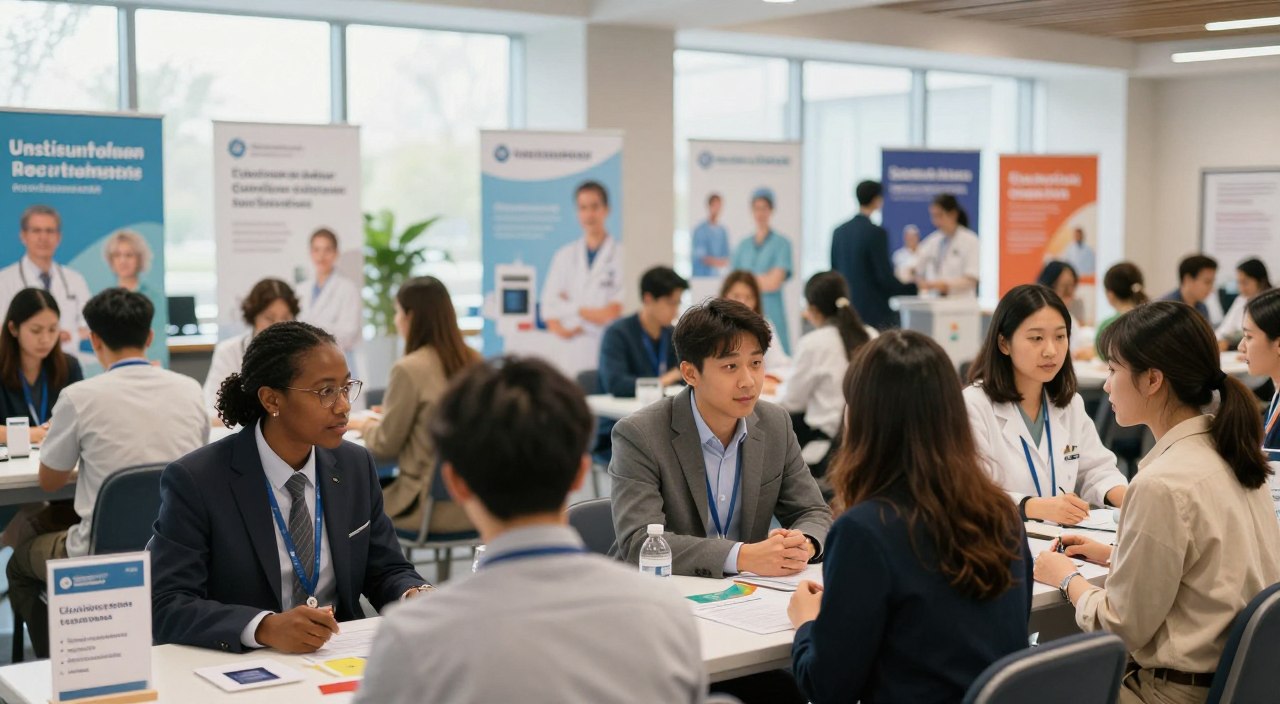
It might surprise you to know that while job openings might not grow much in 2026, healthcare is expected to keep growing. The aging population is a big reason for this, says the indeed Hiring Lab.
As more people get older, they need more healthcare. This means more jobs for doctors, nurses, and other medical experts. This change will have a big impact on the job market.
The growing number of older people is a main reason for this boom. It’s a great time to think about a career in healthcare.
The Current State of Healthcare Employment
The demand for healthcare professionals is higher than ever. This is due to ongoing issues like the nurse shortage. By August 2025, healthcare jobs made up 11.4% of all US jobs. Yet, they accounted for 47.5% of job growth in 2025.
Key Statistics on Healthcare Jobs in 2023-2024
The healthcare sector is growing fast. Many specialties are seeing a lot of job openings.
Employment Numbers Across Specialties
Job growth varies among healthcare specialties. Here are some key statistics:
| Specialty | Employment Numbers (2023) | Employment Numbers (2024) | Percentage Change |
|---|---|---|---|
| Nursing | 4,500,000 | 4,700,000 | 4.4% |
| Physicians | 1,100,000 | 1,150,000 | 4.5% |
| Home Health Care | 800,000 | 850,000 | 6.3% |
Salary Trends and Compensation Packages
Healthcare salaries are changing, with better pay to keep professionals. This is true, even more so for nurses.
The nurse shortage is a big reason for these changes. Nurses can expect their salaries to rise significantly.
Understanding the Healthcare Hiring Boom of 2026
The Blue Chip consensus forecast shows a 1.8% real GDP growth in 2026. This means the healthcare sector will see a big increase in hiring. This growth comes from new technologies, changes in the population, and how patients’ needs are changing.
Expert Predictions and Market Analysis
Experts say the healthcare hiring boom will be shaped by their predictions and market analysis. As the healthcare world changes, knowing these forecasts is key for those looking to find new opportunities.
Bureau of Labor Statistics Forecasts
The Bureau of Labor Statistics (BLS) is key in predicting jobs, including in healthcare. BLS says healthcare jobs will grow a lot by 2026. This is because more people are getting older and need more healthcare.
Industry Expert Insights
Experts also believe that telehealth will play a big role in the hiring boom. With technology getting better, there will be more jobs for those skilled in telehealth.
Telehealth is growing because of new tech and how patients want care. So, healthcare groups will spend more on telehealth. This means they will need more skilled workers.
How the Aging Population Drive Is Reshaping Healthcare Careers
The U.S. population is getting older, leading to a huge increase in healthcare needs. This change is making a big impact on healthcare careers. You will see a big shift in the types of healthcare jobs that are needed.
Demographic Shifts and Their Impact
The changes in demographics are complex. The aging population is not just increasing healthcare needs. It’s also changing what kind of services are needed.
Baby Boomer Retirement Wave
The baby boomer generation is retiring fast, creating a big need for healthcare. This retirement wave is causing:
- More demand for home care services
- A greater need for managing chronic diseases
- A higher need for healthcare professionals with special skills
Increased Chronic Disease Management Needs
As people get older, they are more likely to get chronic conditions like diabetes and heart disease. Managing these conditions needs a detailed approach, including:
- Regular monitoring and check-ups
- Personalized care plans
- Working together with healthcare providers
The trend towards home care is a big part of this shift. More people are choosing home care over traditional care, leading to a big demand for healthcare professionals who can provide quality care at home.
You can take advantage of this trend by learning skills in home care, chronic disease management, and other areas that are in high demand because of the aging population.
Top Healthcare Professions to Target in 2026
Healthcare job postings have skyrocketed, ending October 2025 at 22.6% above pre-pandemic levels. This shows a strong growth in many healthcare fields. Looking ahead to 2026, it’s key to find the top healthcare jobs with high demand.
Clinical Roles with Highest Growth
Clinical roles lead the healthcare hiring boom. This is because more healthcare services are needed due to an aging population. Exploring in-demand healthcare jobs can reveal the most promising career paths.
Physician Assistants and Nurse Practitioners
Physician assistants and nurse practitioners are vital for primary and specialty care. Their roles are growing because of the nurse shortage and the need for more healthcare access.
“The demand for nurse practitioners is expected to grow significantly as they play a critical role in providing primary care, specially in underserved areas.”
| Profession | Growth Rate | Median Salary |
|---|---|---|
| Physician Assistants | 31% | $108,610 |
| Nurse Practitioners | 45% | $115,800 |
Mental Health Professionals
Mental health professionals are also in high demand. This is because mental health issues are getting more attention, and there’s a need for better care.
As the healthcare industry changes, those who adapt and get the right skills will have great opportunities. They will be ready to take advantage of the healthcare hiring boom.
How to Capitalize on the Nurse Shortage Persist Through 2026
The nurse shortage is a big problem that will last until 2026. It’s a challenge and an opportunity for the healthcare world. Knowing the details of this crisis is key for everyone involved.
Understanding the Nursing Gap Crisis
The nursing gap crisis is when there aren’t enough nurses to meet the demand. This shortage affects the quality of care and how work is spread out. It also makes the healthcare system less efficient.
Statistical Overview of Shortages
Recent numbers show that the need for nurses is growing. Some places, like rural areas, face bigger shortages than others. This is because of things like fewer resources and less appealing work conditions.
The Bureau of Labor Statistics says nursing jobs will grow 6% by 2032. But, the real need might be even higher because of an older population and more chronic diseases.
Geographic Areas Most Affected
Places with older people or in rural areas are hit hard by the nurse shortage. States like Nevada, California, and New Jersey need more nurses.
To make the most of the shortage, nurses can focus on areas like gerontology or critical care. Being open to different locations can also help, as some areas are not well-served.
By grasping the nursing gap crisis and choosing the right path, nurses can overcome challenges. They can also succeed in a competitive job market until 2026.
Leveraging the Telehealth Expansion for Career Advancement
Telehealth is growing fast, and healthcare workers can use this trend to advance their careers. This growth is not just about new tech. It’s also about how patients want their care to change.
Remote Clinical Opportunities
More jobs are available for healthcare pros to work remotely. This change meets the need for care that fits patients’ lives better.
Virtual primary care is becoming key. It lets patients get care from home. This job needs both medical know-how and good communication skills for virtual care.
Teletherapy and Mental Health Services
Teletherapy and mental health services are growing too. They help patients who can’t get to in-person care. People in this field must be good at using digital tools for therapy.
The rise of telehealth means more jobs for those who can handle both the medical and tech sides of remote care. Learning about telehealth can help healthcare workers succeed in this new area.
Preparing for the Home Care Surge in Community-Based Services
As more people age, the need for home care services will rise. This means new chances for healthcare workers. The home care field is growing fast, thanks to an aging population and the need for care at home.
Home Health Career Trajectories
Careers in home health offer many paths, from beginner roles to specialized and management positions. Knowing these paths can help you find your place in the growing home care field.
Entry-Level to Management Pathways
Healthcare workers can start in entry-level jobs and move up to management with experience and more education. Important steps include getting the right certifications and learning to lead.
Specialized Home Care Certifications
Getting specialized certifications can boost your career in home care. Certifications like Home Health Aide or Certified Nursing Assistant (CNA) are very useful. They show you’re skilled and dedicated to quality care.
| Certification | Description | Career Benefits |
|---|---|---|
| Home Health Aide | Assists patients with daily living activities in home settings. | Increased job prospects in home care. |
| Certified Nursing Assistant (CNA) | Provides basic care to patients under the supervision of nurses. | Enhanced career opportunities in various healthcare settings. |
By understanding career paths and getting the right certifications, you can succeed in the expanding home care sector. The surge in home care offers a great chance for healthcare professionals to grow their careers and help patients.
Essential Qualifications to Develop Before 2026
The aging population is driving a boom in healthcare hiring. It’s more important than ever to get the right qualifications. As the healthcare industry grows, professionals must keep up by learning new skills and getting the right education.
Education and Degree Requirements
To do well in healthcare, you need the right education and degree. The degree needed can change based on the job. But some degrees are more valuable than others.
Most Valuable Healthcare Degrees
Some top healthcare degrees include:
- Nursing degrees, such as RN or BSN
- Healthcare administration degrees, such as MHA or MBA
- Specialized degrees in healthcare technology, such as health informatics
These degrees can open up in-demand jobs and help you move up in your career.
Online vs. Traditional Education Paths
When getting a healthcare degree, you can choose online or traditional education. Both have their good points and bad points.
| Education Path | Pros | Cons |
|---|---|---|
| Online Education | Flexibility, accessibility | Limited hands-on experience |
| Traditional Education | Hands-on experience, face-to-face interaction | Rigidity, location-dependent |
Choosing between online and traditional education depends on what you prefer and your career goals.
Understanding the essential qualifications in healthcare helps professionals make smart choices about their education and careers.
Creating Your Five-Year Healthcare Career Plan
Healthcare job postings are now 22.6% higher than before the pandemic. It’s a great time to make a long-term career plan. A well-thought-out plan will help you reach your career goals during the healthcare hiring boom.
Assessment of Current Skills and Qualifications
To make a good career plan, you must check your current skills and qualifications. Look at your strengths, weaknesses, and what you need to get better at.
There are many tools and resources to help you find skills you might be missing.
Self-Evaluation Tools and Resources
- Online skills assessments, such as those offered by professional healthcare organizations
- Career counseling services, either in-person or online
- Personalized learning plans, tailored to your career goals
Gap Analysis Techniques
After finding out your strengths and weaknesses, do a gap analysis. This shows what skills and qualifications you need to get.
Knowing what skills you’re missing lets you make a focused plan to get them. You might need more education, work experience, or soft skills.
Keep updating your career plan as you go. This ensures you’re on the right path to your goals.
Mastering the Healthcare Job Application Process
To stand out in the competitive healthcare job market, it’s essential to refine your application skills. The healthcare industry is evolving, with telehealth expansion creating new opportunities. A well-crafted job application is key to securing your desired role.
Healthcare-Specific Resume Optimization
A healthcare-specific resume is vital for making a strong impression on employers. Your resume should highlight relevant clinical experience, certifications, and skills that align with the job requirements.
Clinical Experience Presentation
When presenting your clinical experience, focus on achievements and responsibilities. Instead of saying “worked with patients,” say “provided compassionate care to a diverse patient population, resulting in improved patient satisfaction scores.”
Certifications are highly valued in the healthcare industry. Make sure to prominently display your relevant certifications, such as CPR or specialized training in telehealth practices. This shows your commitment to professional development and adaptability in the context of telehealth expansion.
By optimizing your resume with a focus on clinical experience and relevant certifications, you can increase your chances of success. Tailor your application materials to match the job posting. Highlight your unique strengths and qualifications.
As the healthcare landscape continues to shift, with telehealth expansion at the forefront, your ability to adapt and present your skills effectively will be key to your career advancement.
Overcoming Barriers to Entry in Healthcare Careers
The need for healthcare workers is growing. This makes it key to look into financial help for your career. The nurse shortage and other staffing issues highlight the importance of affordable education and training.
Financial Resources for Healthcare Education
Getting the money for healthcare school can be tough. But, there are many ways to get help. Look into loan forgiveness and employer tuition aid to fund your studies.
Loan Forgiveness Programs
Loan forgiveness programs aim to get more people into healthcare. They can greatly lessen your debt. For instance, the Public Service Loan Forgiveness (PSLF) program wipes out your Direct Loans after 120 payments while working for a qualifying employer.
Employer Tuition Assistance
Many healthcare jobs offer tuition help. These programs can cut your education costs. They also help you grow in your career.
| Financial Resource | Description | Eligibility |
|---|---|---|
| Public Service Loan Forgiveness (PSLF) | Forgives remaining balance on Direct Loans after 120 qualifying payments | Full-time employment with a qualifying employer |
| Employer Tuition Assistance | Employer-provided financial assistance for education expenses | Varies by employer |
| National Health Service Corps (NHSC) Loan Repayment Program | Repayment of qualifying educational loans in exchange for service | Work in a NHSC-approved site in a high-need area |
Using these financial tools can help you get into healthcare careers. You can reach your professional dreams.
Regional Hotspots for Healthcare Employment Opportunities
Healthcare job seekers should know about the top places for jobs. The aging population and the need for home care are boosting demand. This is true in specific cities.
Urban Centers with Highest Demand
Certain cities are becoming key places for healthcare jobs. They have big aging populations and need more healthcare services. These cities offer many job chances for healthcare workers.
Major Medical Hub Cities
- Cities like New York, Los Angeles, and Chicago have big healthcare systems. They will keep needing more healthcare workers.
- Boston and San Francisco are famous for their medical schools and research. They offer jobs for specialized healthcare workers.
Academic Medical Center Locations
Academic medical centers in big cities are also hotspots. They mix patient care with education and research. This creates many job chances for healthcare workers.
- Philadelphia is known for its top medical schools and hospitals. It’s a great place for healthcare jobs.
- Denver and Seattle also have big academic medical centers. They need more healthcare workers.
The home care surge is a big reason for the job demand in these cities. As people age, the need for home care grows. This means more jobs for healthcare workers.
By focusing on these areas, job seekers can find work in a field that’s in demand.
Positioning Yourself for Success in the 2026 Healthcare Market
The healthcare industry is booming, with more job openings than ever. With job postings 22.6% higher than before the pandemic, the field is full of chances. But, there’s also a lot of competition.
To succeed, work on getting the right qualifications and make a career plan for the next five years. Mastering how to apply for jobs is also key. Keeping up with the latest in healthcare will help you stand out.
By knowing the healthcare job market and improving your skills, you can be ready for 2026. This way, you can grab the many opportunities that come your way.
FAQ
What is driving the healthcare hiring boom in 2026?
The boom in healthcare hiring in 2026 is mainly due to an aging population. This leads to more people needing healthcare services, like home care and managing chronic diseases.
How is the nurse shortage affecting the healthcare industry?
The shortage of nurses is a big issue for the healthcare industry. It means there’s a high demand for healthcare workers. This affects both healthcare organizations and the professionals working there.
What are the top healthcare professions to target in 2026?
In 2026, jobs like physician assistants and nurse practitioners will grow a lot. This is because of the aging population and the need for more healthcare services.
How is the expansion of telehealth services creating new opportunities?
Telehealth services are growing, opening up new chances for healthcare workers. This includes remote clinical jobs and teletherapy services.
What are the essential qualifications to develop for a successful healthcare career?
To succeed in healthcare, you need the right education and degrees. Some healthcare degrees are more valuable than others.
How can you create a five-year healthcare career plan?
To make a five-year plan, first check your current skills and qualifications. Then, find what you’re missing and plan how to get it. This will help you advance in your career.
What are the most effective ways to master the healthcare job application process?
To get good at applying for healthcare jobs, make your resume stand out. Show your clinical experience and any relevant certifications you have.
How can you overcome barriers to entry in healthcare careers?
To get into healthcare careers, you might need financial help. Look into loan forgiveness programs and employer tuition assistance.
Which regions are experiencing high demand for healthcare professionals?
Some urban areas are really needing more healthcare workers. This is because of changes in demographics and the need for more healthcare services.
How can you position yourself for success in the 2026 healthcare market?
To succeed in 2026, focus on getting the right qualifications. Make a career plan for five years and get good at applying for jobs. Also, keep up with the latest trends and developments in healthcare.