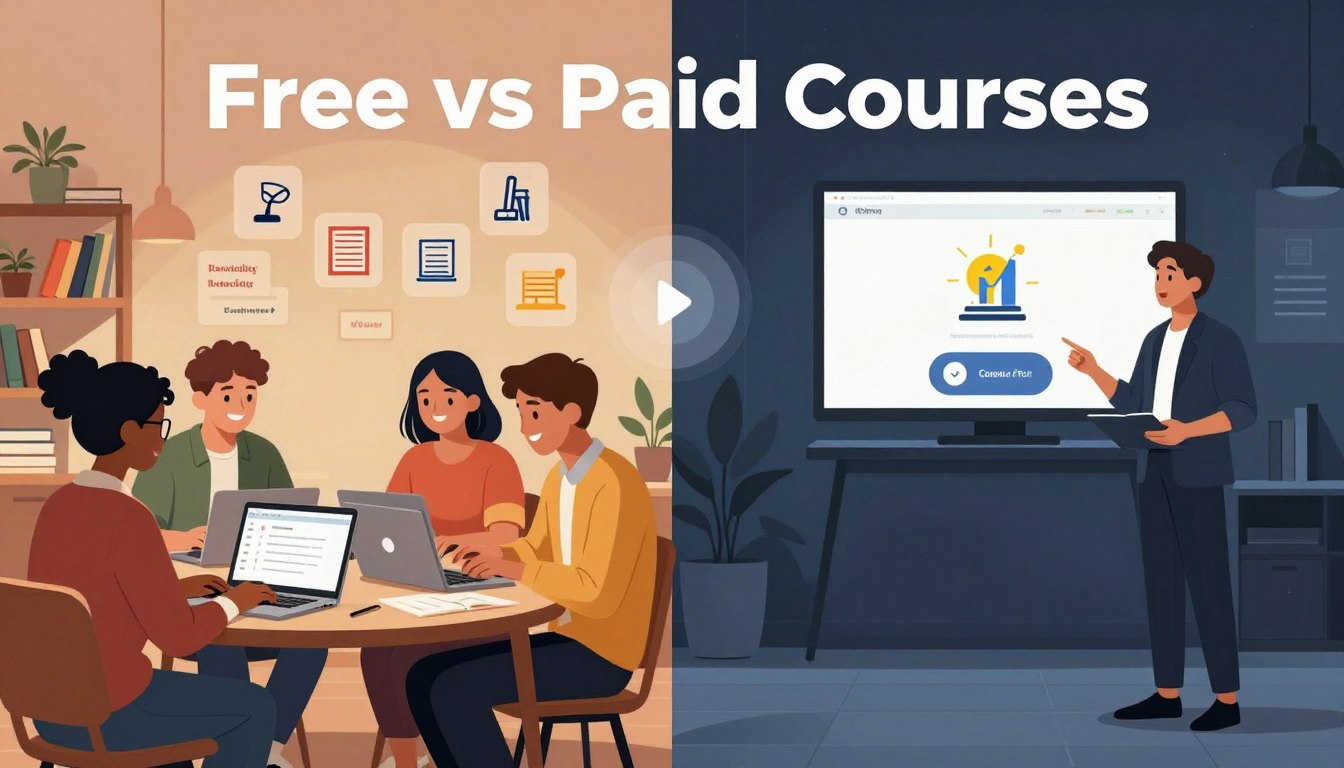
Ever looked at your screen, wondering if that pricey certification is worth it? We’ve all been there, caught between wanting to grow and being on a tight budget. The choice between free vs paid courses can feel like a risk when you’re trying to advance in your career.
You want to make sure every study hour leads to real success. It’s not just about the cost; it’s about the value you get. Doing a education ROI calculation helps you see through the marketing and focus on what really matters for your future.
Learning should make you stronger, not make you doubt your spending. By knowing your goals, you can choose wisely when to spend money and when to use free resources. Let’s find out how to make the best choice for your career path.
The Value of Free Course Options
Exploring online learning means knowing the worth of free courses. The internet is full of sites with free courses. This is both a blessing and a challenge for learners.
The Role of Open Educational Resources
Open Educational Resources (OER) have changed how we learn. Sites like Khan Academy, Coursera, and Investopedia offer top-notch learning without cost. These resources help those wanting new skills or can’t afford traditional school.
These resources boost your knowledge in many areas. For example, Coursera teams up with famous universities to teach a wide range of subjects. This makes learning more accessible, letting you study at your own pace and time.
When Free Content Is Sufficient for Skill Building
Free content is great for learning the basics. If you want to understand a subject or try something new, free courses are a good start. They let you try without spending money.
- They introduce you to the subject.
- They have cool videos and quizzes.
- They can lead to more advanced learning.
Limitations of Free Learning Platforms
Free learning sites have many benefits but also some downsides. A big issue is the lack of personal feedback and guidance. Unlike paid courses, free ones usually don’t offer direct instructor help or a set learning space.
Also, the quality of content varies. But, sites like Khan Academy and Investopedia are known for their quality education.
To get the most from free courses, stay focused and motivated. Set clear goals and a study plan to keep on track.
The Strategic Advantages of Paid Certification
Paid certification brings many benefits that can boost your career. It gives you valuable knowledge and a recognized credential. This can open new doors to opportunities.
Industry Recognition and Credibility
Paid certification is recognized in the industry. It makes you more credible to employers and clients. They trust your expertise when you have a certification from a respected institution.
Key benefits include:
- Enhanced credibility in your field
- Increased trust from employers and clients
- A competitive edge in the job market
Access to Mentorship and Peer Networks
Paid certification programs offer mentorship and peer networks. These are very valuable for your career growth. You get guidance, support, and chances to collaborate.
Some of the advantages of these networks include:
- Personalized guidance from experienced professionals
- Opportunities for networking and collaboration
- Access to exclusive industry events and resources
Structured Learning Paths and Career Support
Paid certification programs have structured learning paths. They help you gain the skills and knowledge you need. Many programs also offer career support to help you reach your goals.
The benefits of structured learning paths and career support include:
- A clear roadmap for your career advancement
- Personalized career advice and guidance
- Assistance with job placement and career development
Analyzing the Free vs Paid Courses Landscape
To get the most out of your learning, it’s key to look at free vs paid courses. You need to figure out which one fits your needs best. This means comparing different things that affect your learning experience.
Comparing Content Depth and Quality
When looking at free and paid courses, content depth and quality are top priorities. Paid courses usually offer more detailed and structured learning paths. They have detailed modules and assessments.
For example, Coursera and edX provide in-depth courses. They focus on both practical skills and theory. Free courses might be less detailed, but some, like Khan Academy and OpenLearn, offer quality content similar to paid courses.
Think about what you want to learn. Free courses might be enough for a basic introduction. But for deeper knowledge or professional certification, paid courses are usually better.
Evaluating Instructor Expertise and Feedback
The skills of the instructors and the quality of feedback are very important. Paid courses usually have experienced instructors who give personalized feedback. For example, Udemy and LinkedIn Learning (formerly Lynda.com) have courses taught by industry pros.
Free courses might also have expert instructors, but feedback and interaction can vary a lot.
Key considerations include:
- The qualifications and experience of the instructors
- The availability of direct feedback mechanisms, such as Q&A sessions or discussion forums
- The opportunity for peer review and interaction
Platform Features and User Experience
The features and user experience of a learning platform are also important. Paid platforms usually offer a better learning environment. They have features like customer support, mobile apps, and offline access.
For example, Pluralsight and Skillshare have great user interfaces and tools for learning.
When choosing between free and paid courses, think about these things:
- Ease of navigation and course discovery
- Availability of supplementary materials and resources
- Mobile compatibility and offline access
By looking at these points, you can decide if a free or paid course is best for your goals.
Calculating Your Education ROI
When you think about investing in education, it’s key to look at the return on investment (ROI). This means checking both the costs and the benefits of your education. It helps you make a smart choice.
The ROI of education isn’t just about money. It also includes the value of your time and the chance for career growth. As you explore different education paths, like free online courses or paid programs, figuring out your ROI helps you choose wisely.
Assessing the Cost of Time Versus Money
Understanding the cost of your time versus money is a big part of calculating your education ROI. Time is precious, and the hours you spend learning could be used for other things. Opportunity cost is important here; it’s about what you give up when you choose one thing over another.
For example, if you take a paid course that takes a lot of time, think about the cost of the course and what you could have earned. Free courses might save money but take a lot of time too.

Determining Potencial Salary Increases
One big financial gain from education is the chance to earn more. Studies show that people with more education often make more money. The US Bureau of Labor Statistics says there’s a link between education and earnings, making education a smart investment for better jobs.
To figure out if you’ll earn more, look at the average salaries for your dream job before and after getting your degree or certification. This will show you the financial gain of your investment.
Long-term Career Advancement
Education also leads to long-term career growth. Degrees or certifications can lead to better jobs and more money over time. They can even open doors to leadership roles, boosting your career and earnings.
When you calculate your education ROI, think about both short-term gains and long-term career growth. Look at chances for promotions, career changes, and growth in your field. This helps you see the full value of your education investment.
Identifying When to Upgrade Your Learning Path
Knowing when to move from free resources to paid courses is key. Free courses are great, but they might not be enough for your career goals. This is true if you want to specialize or get recognized for your skills.
Transitioning from Hobbyist to Professional
The difference between a hobbyist and a professional can be hard to see, like in coding, writing, or design. But when you see your skills as a way to make money or a career, it’s time to level up your learning.
Investing in paid certification gives you structured learning and recognized credentials. These are often needed to be taken seriously in your field.
“The best investment you can make is an investment in yourself.”
The Necessity of Formal Credentials for Job Applications
In many fields, formal credentials are not just good; they’re needed. When you apply for jobs, a certification from a respected place can really help.
- It shows you’re serious about your field.
- It proves your skills and knowledge.
- It can help you stand out in a crowded job market.
Gaining Competitive Edges in Saturated Markets
In crowded job markets, it’s key to stand out. Paid certification can give you an edge by teaching you in-demand skills.
By investing in your education, you’re not just learning new things. You’re also showing employers you’re committed and willing to work hard.
- Find areas where you need to get better.
- Look for certifications that are respected in your field.
- Choose courses that offer mentorship and networking chances.
Making the Right Choice for Your Career Goals
When choosing between free and paid courses, think about your goals. A course pricing guide can show you the value of your investment. Decide which option fits your career dreams.
Look at your current skills and what you need for your dream job. Paid courses with certification might be best if you’re changing careers or moving up. They offer a clear path, guidance, and recognition in your field.
Free courses are great for trying new subjects or adding to what you already know. Your choice depends on your goals and how much you’re willing to spend.
By thinking about your goals and the options available, you can choose wisely. This choice will help you grow in your career.