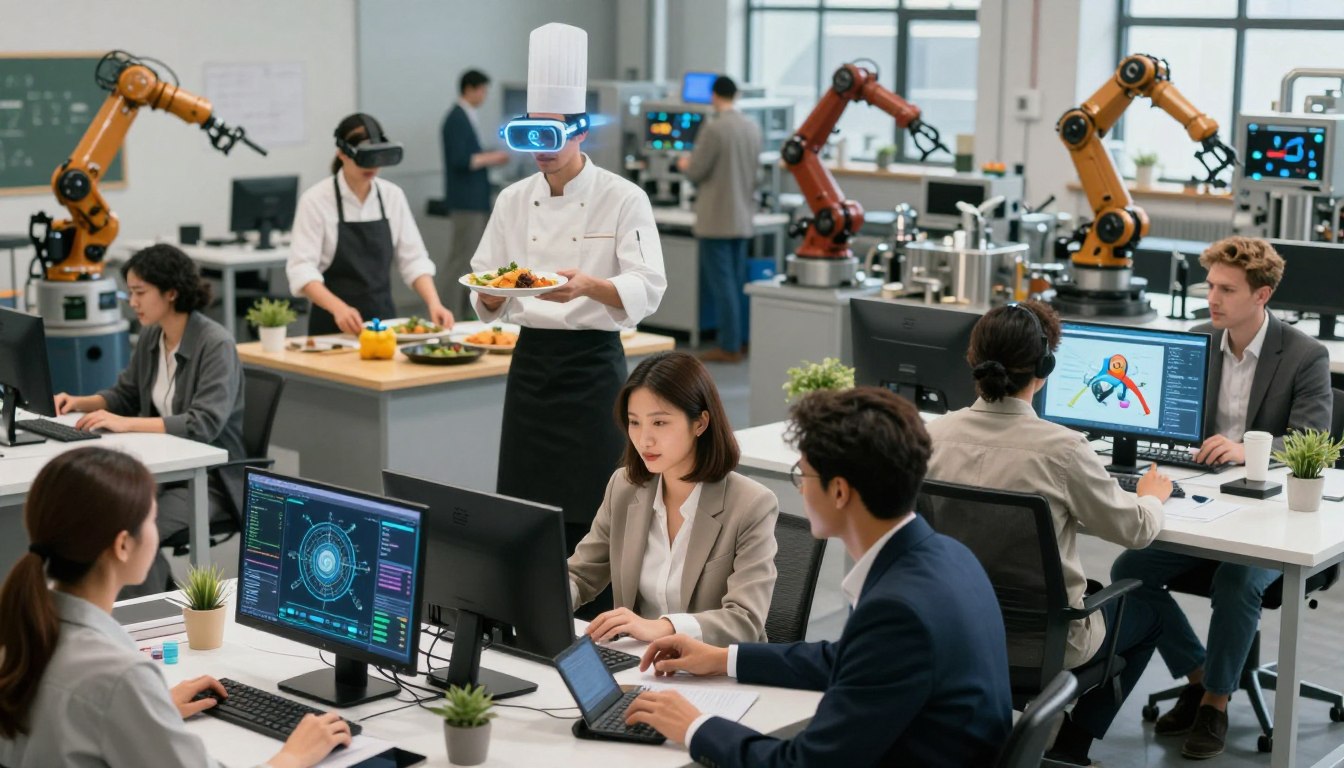
Did you know that flexible work arrangements are now offered by over 40% of U.S. employers in fields like manufacturing, education, and even hospitality? This isn’t just a tech trend anymore.
You’re witnessing a fundamental change in the professional landscape. Your career path is no longer confined to a traditional office or a single location. New roles are blending remote flexibility with crucial in-person collaboration.
This shift is powered by technology and a clear demand for better work-life integration. Organizations see the competitive edge in offering these modern arrangements. They are attracting top talent and boosting productivity.
Your opportunities are expanding into areas you might not have considered. Creative sectors, retail management, and healthcare systems are actively building these flexible roles. The future of your profession is being rewritten.
This guide will help you navigate this exciting new market. You’ll learn how to identify growing industries and position yourself for success. The goal is to find a path that aligns with your lifestyle and professional ambitions.
The Hybrid Jobs Landscape
A new wave of career opportunities blends scheduled office presence with the freedom to work remotely. This model represents a fundamental shift in professional structure. It creates a balanced experience by merging collaborative in-person days with independent productivity from a chosen location.
Defining hybrid jobs and their core elements
These arrangements typically follow a predetermined weekly schedule. You might spend two or three days collaborating with teammates on-site. The rest of your time is for focused tasks from your home or another remote space.
The evolution of work environments
Change has accelerated dramatically in recent years. Technological capabilities and new workforce expectations are key drivers. Organizations now see that rigid office requirements can limit their talent pool and employee satisfaction.
You will find that each hybrid role differs across companies and industries. Some require more in-office days, while others offer greater flexibility. Understanding the specific structure of any opportunity is essential.
Success in this field demands strong communication skills and adaptability. You must maintain productivity and team connection regardless of your physical location. The professional landscape continues to mature as best practices develop and policies refine.
Emerging Industries Offering Hybrid Career Opportunities
From tech to healthcare, companies are redesigning roles to offer a blend of in-office and remote work. This shift opens new paths for professionals seeking balance.
Technology, AI, and Cloud Innovations
Tech firms lead in creating blended roles. For example, ServiceNow hires a Senior UI-focused engineer. This position involves designing AI-powered user experiences.
Your skills in LLMs and cloud-native technologies are in high demand. Such roles often require building scalable front-end components. They integrate advanced tools like Copilot for observability.
Healthcare, Finance, and Beyond
The healthcare field now combines telehealth with in-person care. Administrative roles balance office days with remote flexibility.
Financial services companies embrace similar models. Advisors meet clients virtually and in-person. Analysts enjoy reduced desk presence.
Your business acumen is valuable across sectors. Organizations see flexible jobs boost retention and talent pools. These opportunities redefine traditional work structures.
Hybrid Jobs Opportunities in Unexpected Fields
Look beyond the usual suspects. The most intriguing flexible roles are now flourishing in sectors you might not expect.
Creative industries, retail operations, and even local government are redesigning work. They are thoughtfully determining which tasks need a physical presence and which thrive remotely.
Creative and Media Industries
Your opportunities here have transformed. Studios and agencies once demanded full-time, in-person collaboration.
Now, roles blend essential creative sessions on-site with focused independent work from anywhere. Writers, editors, and designers enjoy this new balance.
Retail and Logistics Advancements
Technology drives change in the retail and logistics field. It enables a split between customer-facing duties and back-end coordination.
You could manage inventory on the floor for part of the week. The remaining time might involve remote planning, vendor analysis, and team meetings.
Community-focused organizations are also adapting. Nonprofits and local agencies develop roles that let you serve your community effectively.
These positions offer the flexibility needed for a sustainable career. This proves blended jobs can succeed in nearly any sector with the right planning.
How Hybrid Work Enhances Career Flexibility
Imagine reclaiming hours each week, time once lost to traffic and transit, now yours to direct toward your passions and priorities. This control is a core advantage of a modern hybrid role. You gain unprecedented command over your work-life integration.
Your professional advancement possibilities expand geographically. You are no longer limited to employers within a strict commuting radius. This opens doors to a wider array of positions while keeping valuable in-person collaboration.
The saved time from fewer commutes adds up. You can invest those hours in skill development, family, or personal wellness. These benefits accumulate significantly over months.
You can structure your schedule to match your natural rhythm. Work from home during your most productive hours, whether early morning or late afternoon. This flexibility also lets you manage appointments or caregiving without hindering your career progress.
Ultimately, this model allows you to balance ambitious professional goals with personal needs. You can pursue a job path that was once logistically impossible. It creates a sustainable and fulfilling professional life.
Assessing Your Skills for a Successful Hybrid Role
The key to securing a balanced position is a candid evaluation of your current skills. This self-assessment is your first step toward a modern career path.
Identifying transferable skills for hybrid work
Your past experience holds immense value. Skills like clear communication and self-management are universal.
Think about times you worked independently or solved problems. These abilities translate directly to flexible jobs. Frame them clearly in your applications.
Bridging experience and training gaps
Identify any specific skills gaps that could limit your prospects. Create a plan to address them through targeted training.
Online courses and certifications can fill these gaps. Your formal education is important, but demonstrated ability often matters more.
Show a commitment to continuous learning. Always research the specific requirements for each role. This prepares you to be a competitive candidate in any hybrid environment.
The Role of Ongoing Training in Hybrid Jobs
Staying relevant in a modern workplace demands an active investment in your own professional education. You can no longer rely on casual office conversations for knowledge. Your growth depends on a deliberate pursuit of learning.
Professional development and upskilling
Your development requires you to seek out opportunities. This means pursuing certifications and mastering new collaboration platforms. The skills you build directly increase your value and advancement potential.
Many forward-thinking companies provide strong support for this journey. They offer training stipends, online course access, and mentorship programs. These resources recognize that continuous learning is essential for success.
“The only thing that is constant is change. Your ability to learn is your greatest career asset.”
Your education becomes a permanent process. You must adapt to new tools and best practices as they emerge. This commitment keeps you competitive and effective.
The opportunities for growth in these roles are vast. You can access global expertise through virtual conferences and online training. This removes old geographic limits to your professional skills development.
Navigating Job Directories for Hybrid Positions
Finding the right flexible role requires smart use of modern job platforms. Specialized directories now categorize positions by work arrangement, helping you target opportunities that match your lifestyle.
Utilizing advanced filters to find the right match
Your search becomes efficient when you leverage advanced filters. Narrow results by location, industry, and required skills. Specify “hybrid” as a distinct arrangement to see roles offering the balance you seek.
Explore major markets like Salt Lake City for growing availability. For instance, ServiceNow has a hybrid or remote position in Salt Lake City, UT for a Senior UI-focused engineer. This role provides flexibility while maintaining connection to a vibrant tech hub.
The Salt Lake City area has emerged as a key market for blended roles. Sectors like technology, finance, and healthcare here offer compelling opportunities. The region is known for quality of life and a strong business presence.
Incorporate alerts for hybrid positions in your target markets. Whether focusing on Salt Lake City or other Lake City regions, alerts keep you updated. Position descriptions typically clarify in-office expectations, aiding your assessment.
Research companies by exploring multiple postings. This gives insight into organizational culture and their dedication to flexible work arrangements. Your strategy ensures you find a role that fits both your career and personal needs.
Comparing Hybrid Jobs with Traditional Work Models
A direct comparison reveals how blended arrangements differ from traditional nine-to-five roles in structure and outcome. You gain a clearer picture of what each path offers for your career and lifestyle.
Benefit Comparisons and Role Expectations
Your compensation package in a modern role typically matches traditional standards. This includes health insurance, retirement plans, and paid time off. Flexibility is an added advantage, not a substitute for these core benefits.
Your expectations shift from hours logged to results achieved. Accountability for outcomes becomes the primary measure of your work. This focus on productivity replaces old presenteeism models.
Key differences you will notice include:
- Enhanced time management needs to coordinate office days with remote focus.
- Greater job satisfaction from reduced commute stress and better personal integration.
- Broader positive impacts, like lower environmental costs and wider talent access for companies.
Career advancement in a hybrid setting can equal or surpass traditional paths. Success depends on clear communication, proper tools, and supportive management from the organization.
Exploring hybrid jobs in Today’s Evolving Work Environment
Today’s work environment has matured significantly. Blended arrangements have moved past initial experiments to establish proven flexible models. Businesses across virtually every field now recognize their strategic value.
Your exploration reveals companies continuously refine their approach. They use feedback from employees and clear productivity metrics. Best practices from early adopters help navigate challenges.
- They are self-directed and manage their time effectively.
- They communicate proactively to maintain strong team connections.
- They demonstrate consistent reliability, regardless of their location.
You’ll notice hybrid work has created new business models. Co-working spaces and collaboration tools are designed for distributed teams. This innovation supports the growing demand for flexibility.
Your area of interest likely includes these options now. Organizations have adapted their processes and culture effectively. The environment keeps evolving with different schedules.
You have opportunities to find an organization whose model aligns with your style. This alignment is key for long-term satisfaction and success in your career.
Success Stories: Case Studies in Hybrid Work
Concrete examples from industry leaders demonstrate how balanced work models drive both employee satisfaction and business performance. You can see the strategy in action at firms like Schwab.
Real-life examples from top industries
Schwab’s approach highlights meaningful in-person connection. This helps teammates share ideas and build trust. They balance this with remote time for focused work.
Other leading company examples show similar success. They invest in technology and train managers for distributed teams. This creates intentional opportunities for team members to connect.
Lessons learned from hybrid teams
The experience of successful groups offers clear lessons. Clear communication protocols and shared expectations are essential. These practices ensure all team members feel equally valued.
Complex projects require careful coordination across locations. Positive outcomes often include improved retention and maintained productivity. Your understanding of these factors is key for navigating modern work arrangements.
Preparing Your Resume for the Hybrid Job Market
Crafting a standout application requires a resume that speaks directly to the demands of modern, flexible work. Your document must bridge the gap between remote productivity and in-office collaboration.
Showcasing Remote and In-Office Achievements
Tailor your content for each position. Highlight skills like self-management and proficiency with digital collaboration tools. Describe your experience in flexible environments with specific examples.
Quantify your achievements to prove you deliver results. Mention projects you managed independently or as part of a distributed team. This shows you thrive without constant supervision.
Incorporate keywords from the job description naturally. Your skills section should feature both technical and soft abilities essential for success.
- Time management
- Written communication
- Virtual collaboration
- Adaptability
Strengthen your resume with a summary statement. Express your understanding of what makes blended jobs successful. This immediately signals your fit for the role.
Leveraging Technology for Seamless Hybrid Collaboration
The right technological infrastructure transforms a distributed team into a cohesive and productive unit. Your success in a flexible arrangement depends on leveraging tools that bridge physical gaps.
Integrating advanced communication tools
You must become proficient with platforms like Microsoft Teams, Slack, and Zoom. These systems enable real-time coordination regardless of location. Project management software keeps tasks visible and aligned.
Your team’s effectiveness hinges on consistent use of shared systems. Documentation and knowledge bases ensure everyone accesses information. This support prevents delays and confusion.
The office setup must include reliable video conferencing equipment. Cloud-based file systems and strong security protocols protect data. This infrastructure supports seamless work from any site.
Master asynchronous communication for routine matters. This technique allows progress without real-time meetings. It respects different schedules and time zones.
Your skill extends to digital etiquette. Know when to send an email versus a quick message. Create inclusive virtual meetings where all team members engage fully.
Organizational support systems are crucial. IT help desks, technology training, and home office equipment directly impact your effectiveness. Evaluate these resources when considering a role.
Policies, Benefits, and Work Schedules in Hybrid Arrangements
Your compensation and schedule in a modern role are governed by clear company policies designed for flexibility. These frameworks ensure clarity for you and your team.
Understanding healthcare, pay, and insurance benefits
Your health insurance, dental, and vision coverage typically match traditional roles. Employers provide comprehensive benefits regardless of your work location.
Your pay structure should be competitive with market rates. Some companies may adjust it based on your geographic area.
Other insurance benefits, like life or disability coverage, apply equally. Verify your home office is covered by proper policy.
Flexibility in work hours and schedules
Your weekly schedule often follows a clear model. For example, at Schwab, most employees work onsite four days per week.
You may work remotely one day per week. This specific day is coordinated with your manager to support team needs.
Eligible staff can also use up to four fully remote work weeks per year. This offers flexibility for travel or deep-focus time.
New hires typically become eligible after a probationary period, such as six months. Your manager approves these arrangements.
This approach balances structure with adaptability. It provides clear expectations about hours and days while accommodating modern life.
Managing Expectations in Hybrid Work Environments
Navigating a split schedule demands proactive planning and mutual understanding. You must establish clear ground rules with your manager and team. This ensures everyone knows when you will be in the office versus working from home.
Coordinating In-Office and Remote Days
Your coordination is key for success. At Schwab, the remote day isn’t fixed. Employees choose the day that best supports their work and team priorities, coordinated with their manager.
You should select your office days strategically. Aim to be on-site when collaboration or key meetings happen. This maximizes the value of your in-person time.
Maintain flexibility in your schedule. Your manager may need to adjust arrangements to ensure strong client service. This keeps the team aligned throughout the week.
Your home workspace setup directly impacts your effectiveness on remote days. Ensure you have reliable technology and minimal distractions. The time spent planning ensures productivity in both locations.
Strategies for Job Seekers Entering the Hybrid Market
Targeting companies with mature policies is your first step toward a sustainable position. Develop a focused target job search. Prioritize organizations with clear, established flexible models.
Your professional network provides crucial insights. Connections reveal true company culture and the actual flexibility offered. This information helps you identify roles with genuine support for work-life balance.
Scrutinize job descriptions for specific arrangement details. Look for required office days and team expectations. Research each company’s approach thoroughly before applying.
Align potential opportunities with your long-term career goals. Ensure the role and environment match where you perform best. Prepare to discuss your self-management skills in interviews.
Be patient and selective in your search. The right job offers meaningful work and growth opportunities. Wait for the ideal position that provides the balance you seek.
Wrapping Up Your Journey into Hybrid Jobs
This comprehensive guide has mapped the terrain of blended work models, from local communities to national trends. Your vision for a flexible career is now supported by actionable strategies. Apply these insights to navigate the evolving market with confidence.
The community embracing these roles grows every day across each state. Your success depends on choosing a company with clear policy and strong support systems. Effective management and continuous development are key to thriving in this work environment.
Remember to balance your time and hone relevant skills. A modern role offers the integration you seek. Your journey into flexible jobs starts with this knowledge, ready for the future of work.
FAQ
What exactly is a hybrid work model?
A hybrid work model blends in-office and remote schedules, offering professionals flexibility. This structure typically involves a set number of days per week at a company location, with the remainder from a home office. It relies on strong communication systems and clear management policies to keep teams aligned and projects on track.
Which industries are now offering these flexible roles?
Beyond common fields like technology and finance, opportunities are growing in unexpected areas. Creative media, retail management, logistics coordination, and community health now feature positions that blend on-site tasks with remote support work. This expansion gives professionals in many sectors a chance to gain greater career flexibility.
How do I know if my skills are a good match?
Assess your proficiency in self-management, digital communication, and collaborative software. Successful candidates often show they can handle projects independently while staying connected with their team. Review the specific requirements in job descriptions to identify any training or experience gaps you need to address.
What tools are essential for success in this environment?
Seamless collaboration depends on technology. Platforms like Slack, Microsoft Teams, and Zoom are fundamental for daily communication. Cloud-based project management systems, such as Asana, and secure document sharing are also critical. Your company’s IT support will often provide training on these essential systems.
What benefits and policies are common with these positions?
Many roles include comprehensive health, vision, and dental insurance, along with retirement account options. Pay is typically commensurate with experience and education. A clear policy outlines the required in-office schedule, work hours, and procedures for requesting schedule adjustments, ensuring everyone understands the arrangement.
How should I search for these opportunities?
Use advanced filters on major job directories. Search for terms like “hybrid,” “flexible schedule,” or “partial remote.” Filter by your city, such as Salt Lake City, to find local opportunities with remote days. Carefully review each listing to understand the specific weekly in-office requirements before applying.
How can I highlight this work style on my resume?
Showcase achievements that demonstrate remote productivity and in-office collaboration. Use bullet points to describe projects where you managed timelines independently or led a team meeting virtually. Mention specific software systems you’ve mastered and any results that improved business operations, regardless of location.