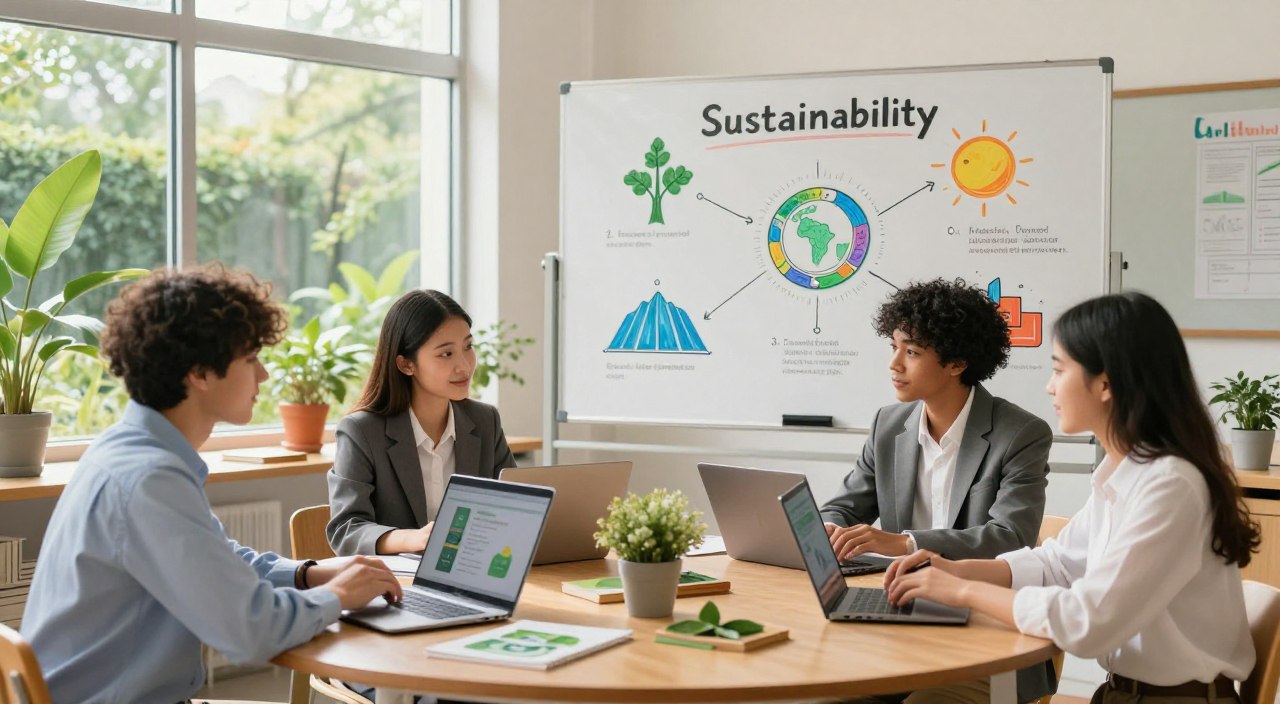
Did you know over 70% of the world’s top companies now focus on sustainability? This change is making professionals with knowledge in environmental issues and sustainable practices more sought after.
teach you about climate impacts and how to make industries more sustainable.
With free online courses, you can learn more about sustainability and improve your career. Coursera has many courses to help you start your journey.
The Rising Importance of Sustainability Education in 2026
The world is facing big environmental challenges. Sustainability education is now more important than ever in 2026. Issues like climate change, resource scarcity, and environmental damage are pushing the need for sustainability skills in many fields.
Global Environmental Challenges Driving Demand
The world is dealing with big environmental problems. These problems are affecting our ecosystems and societies. Two main reasons for the need in sustainability education are:
Climate Change Acceleration and Response
Climate change is getting worse fast. We’re seeing higher temperatures, more natural disasters, and unpredictable weather. It’s key to learn how to fight climate change and adapt to its effects.
Resource Scarcity and Management Needs
Natural resources like water, land, and minerals are getting scarcer. We need to manage and use them wisely. Sustainability education teaches us how to save resources, use them efficiently, and find new solutions to avoid running out.
Why Sustainability Skills Are Essential for Your Future
The world is moving towards more sustainable ways. This means more jobs for people with sustainability skills. Key areas where these skills are needed include:
- Industry transformation towards green practices
- Career opportunities in sustainability sectors
Industry Transformation Toward Green Practices
Companies are going green to lessen their environmental impact. They want to follow rules and improve their image. People with knowledge of sustainable practices are in high demand to help lead this change.
Career Opportunities in Sustainability Sectors
The focus on sustainability is creating new jobs. These jobs are in fields like renewable energy, sustainable agriculture, and environmental consulting. Learning about sustainability can really boost your career.
What Makes Coursera Sustainability Courses Valuable
Coursera’s sustainability courses are valuable because they are both rigorous and practical. They give you the knowledge and skills to face big sustainability challenges.
University Partnerships and Expert Instructors
Coursera works with top universities and industry experts to create these courses. You learn from leading institutions and experts, making sure the information is up-to-date and relevant.
Leading Academic Institutions Behind the Courses
Many courses are made by famous universities. This means you get top-notch education online.
Industry Practitioners as Course Contributors
Experts from the field also help make these courses. They add real-world insights and practical examples. This mix of theory and practice makes learning better.
Practical Skills vs. Theoretical Knowledge Balance
Coursera’s courses balance theory and practical skills. You get to use your knowledge in projects that mimic real situations.
Real-World Applications in Course Projects
These courses teach you how to track carbon, assess life cycles, and measure sustainability success. You learn skills that you can use in your job.
Theoretical Foundations for Long-Term Understanding
But, the courses also give you a strong theoretical base. This lets you understand sustainability deeply, helping you tackle new challenges.
How to Access Free Coursera Sustainability Courses
Learn how to get into Coursera’s free sustainability courses. Coursera makes it easy for you to dive into sustainability topics from top universities.
Navigating the Coursera Platform Efficiently
First, you need to get good at using Coursera. This means making an account and finding the right courses with filters.
Creating Your Account and Setting Preferences
Start by signing up on Coursera. Fill out your profile to get course suggestions that match your interests. This way, Coursera will show you courses that interest you in sustainability.
Using Search Filters to Find Sustainability Content
Look for sustainability courses using the search bar. Use filters like ‘free courses’ and ‘sustainability’ to find what you need. This makes it easier to find courses that meet your goals.
Understanding Yale and Princeton Audit Options
Coursera works with Yale and Princeton to offer top-notch sustainability courses. Knowing about their audit options lets you get these courses for free.
How to Enroll in Audit Mode
To join in audit mode, just click ‘Audit’ when signing up for a course. This lets you see course materials without needing a paid certificate.
Limitations of Audit vs. Paid Enrollment
| Feature | Audit Mode | Paid Enrollment |
|---|---|---|
| Course Materials | Available | Available |
| Graded Assignments | Limited Access | Full Access |
| Certificate upon Completion | No | Yes |
Knowing these differences helps you choose between auditing or fully enrolling. It depends on what you want to achieve from the course.
Top Free Coursera Sustainability Courses for 2026
In 2026, the need for learning about sustainability is growing fast. Coursera’s free courses in sustainability are more important than ever. You can get top-notch education from around the world without spending a dime. This section shows the most sought-after and newest sustainability courses on Coursera.
Most Popular Sustainability Fundamentals Courses
Coursera has many foundational sustainability courses that are both popular and well-regarded. These courses teach the key concepts of sustainability.
Introduction to Sustainable Development
Popular courses like “The Sustainable Development Goals” by the University of Copenhagen and “The Age of Sustainable Development” by Columbia University are top picks. They give a deep dive into sustainable development basics.
- Understand the UN’s Sustainable Development Goals (SDGs)
- Learn about the historical context of sustainable development
- Explore case studies on implementing SDGs
Environmental Science Basics
Understanding environmental science is key to grasping sustainability. These courses cover the basics of ecosystems, biodiversity, and conservation.
Newly Released Specialized Courses for 2026
Coursera keeps adding new courses in sustainability for 2026. These courses tackle the latest issues and advancements in the field.
Cutting-Edge Climate Technology Courses
New climate technology courses focus on solving climate change with innovative solutions. Topics include carbon capture, renewable energy, and climate-resilient infrastructure.
- Discover the latest advancements in climate technology
- Learn about the application of climate technology in various industries
- Understand the impact of climate technology on future sustainability
Emerging Sustainability Management Programs
New courses in sustainability management cover the latest in making businesses and organizations sustainable. Topics include sustainable supply chain management and ESG reporting.
- Sustainability reporting and metrics
- Sustainable supply chain management practices
- ESG integration in business strategies
Yale and Princeton Sustainability Courses You Can Audit in 2026
Yale and Princeton are making top sustainability courses free on Coursera in 2026. These famous schools are working with Coursera to share quality education with everyone. By auditing these courses, you can learn about sustainability without spending a dime.
Yale’s Environmental Management Offerings
Yale’s School of the Environment is famous for its environmental management programs. The Coursera courses cover many topics, like sustainable development and environmental policy.
Yale School of the Environment’s Flagship Courses
Some key courses include “Introduction to Environmental Science” and “Sustainable Development.” These courses give you a strong base in environmental management and sustainability.
How to Get the Most from Yale’s Course Materials
To get the most out of Yale’s courses, be active with the materials. Join discussions, do assignments, and check out extra resources from the teachers.
Princeton’s Climate Science and Policy Courses
Princeton is known for its climate science and policy research. The Coursera courses explore climate change, its effects, and ways to fight it.
Princeton’s Interdisciplinary Approach to Sustainability
Princeton looks at sustainability from many angles, including science, economics, and social sciences. Courses like “Climate Change: Science and Policy” show this wide view.
Accessing Princeton’s Research-Based Learning Resources
When auditing Princeton’s courses, you get to use top research resources. This includes lectures from experts and the latest research papers.
| Institution | Course Title | Focus Area |
|---|---|---|
| Yale | Introduction to Environmental Science | Environmental Management |
| Princeton | Climate Change: Science and Policy | Climate Science and Policy |
SDGs and Climate Action Courses on Coursera
Coursera has many courses on SDGs and climate change. These courses help you learn for a sustainable future. They give you the skills to make a difference in your work and community.
Courses Aligned with UN Sustainable Development Goals
Coursera works with top universities to create SDG-focused courses. For example, “Driving business towards the Sustainable Development Goals” by Erasmus University Rotterdam is a great course.
SDG Implementation and Measurement Courses
- Courses on SDG implementation strategies
- Measuring SDG impact and progress
- Understanding SDG indicators and metrics
Sector-Specific SDG Application Courses
- Applying SDGs in business and industry
- SDG integration in urban planning and development
- Sustainable agriculture and food systems
Specialized Climate Change Mitigation Courses
Coursera also has courses on climate change. These courses help you understand and tackle this big issue. They cover important topics like carbon management and climate resilience.
Carbon Management and Accounting
Learn how to analyze and manage carbon footprints. This teaches you to reduce greenhouse gas emissions.
Climate Resilience and Adaptation Strategies
Discover strategies for adapting to climate change. Learn how to build resilience in communities and organizations.
Circular Economy Fundamentals and Applications
The shift to a circular economy is changing how we make and use things. Moving away from the old linear economy model is key. Understanding the circular economy’s principles and uses is vital.
Introduction to Circular Economy Principles
The circular economy aims to reduce waste and keep resources in use forever. It’s different from the old linear economy, which makes, uses, and then throws things away.
Transitioning from Linear to Circular Models
Switching to a circular economy means big changes for businesses. It’s about making production processes more efficient. This way, we can reuse and recycle materials better.
Waste Reduction and Resource Optimization
Reducing waste and using resources wisely are key strategies. This helps the environment and saves money by cutting down on raw material and waste costs.
Business Models for Circular Economy Implementation
Introducing circular economy principles needs new business models. These models aim to create value through sustainable practices.
Product-as-Service and Sharing Economy Concepts
Product-as-a-service models are becoming popular. Customers pay for product use, not ownership. Sharing economy ideas also encourage sharing resources, reducing the need for personal ownership.
Circular Supply Chain Design
Creating circular supply chains means choosing materials and partners for recycling and reuse. This helps keep production and consumption cycles closed.
| Business Model | Description | Benefits |
|---|---|---|
| Product-as-a-Service | Customers pay for product use | Reduced waste, increased efficiency |
| Sharing Economy | Shared use of resources | Lower costs, reduced demand on resources |
| Circular Supply Chain | Materials selected for recyclability | Closed-loop production, reduced waste |
Renewable Energy and Clean Technology Courses
Renewable energy and clean technology are key areas in Coursera’s 2026 offerings. The world is moving towards sustainable energy sources. This shift has increased the need for experts in these fields.
Solar, Wind, and Alternative Energy Courses
Coursera has courses on solar and wind energy basics. These courses aim to give a full understanding of renewable energy.
Technical Fundamentals of Renewable Systems
Learning about renewable systems is vital. It covers how to design, set up, and maintain solar, wind, and other alternative energy sources. This knowledge is essential for creating effective renewable energy solutions.
Energy Transition Management
Energy transition management is about moving from fossil fuels to renewable energy. Coursera’s courses on this topic explore the economic, social, and environmental sides of this shift.
Green Technology Innovation Courses
Coursera also offers courses on green technology innovation. These focus on new clean technologies and sustainable design. They aim to give learners the skills to innovate in the clean tech sector.
Emerging Clean Technologies of 2026
The clean technologies of 2026 include advanced solar panels and energy storage systems. Coursera’s courses dive into these new developments and their uses.
Sustainable Design and Engineering Principles
Sustainable design and engineering are key for clean technologies. They must be good for the environment and cost-effective. Coursera’s courses teach these principles and practices.
| Course Title | Provider | Focus Area |
|---|---|---|
| Renewable Energy Systems | University of Colorado Boulder | Solar and Wind Energy |
| Clean Technology Innovation | University of Michigan | Emerging Clean Technologies |
| Sustainable Energy | University of Delaware | Energy Transition Management |
“The future of energy is renewable, and it’s exciting to see the innovation happening in this space.”
Sustainable Business and Corporate Responsibility
The importance of sustainable business practices is growing. Companies are now focusing on their environmental and social impact. This change is driven by laws, consumer demand, and the need to last long-term.
ESG Reporting and Sustainability Metrics
Environmental, Social, and Governance (ESG) reporting is key for companies to show their commitment to sustainability. ESG metrics help measure and share a company’s performance in these areas.
Measuring Environmental and Social Impact
Companies must now track and report their environmental and social efforts. They look at things like carbon emissions, water use, and diversity. They also check how their boards are made up.
Communicating Sustainability Performance
It’s important for companies to share their sustainability achievements. They do this through regular reports, dashboards, and talking to stakeholders.
Sustainable Supply Chain Management
Sustainable supply chain management means the whole value chain follows green practices. This includes choosing suppliers who are ethical and fair, and reducing environmental impact.
Ethical Sourcing and Procurement
Ethical sourcing means picking suppliers who are responsible. This means using materials from sustainable sources and making sure suppliers follow labor laws.
Reducing Environmental Footprint in Operations
Companies can lessen their environmental impact by reducing waste and energy use. They can do this by adopting circular economy principles and using green technologies.
By focusing on sustainability, companies can help the planet and improve their reputation. They also meet legal requirements and ensure long-term success. Sustainability is a major part of business strategy for 2026 and beyond.
Finding Coursera Sustainability Free Options in 2026
Looking for free sustainability courses on Coursera in 2026 is simple. Just use the right search strategies. You’ll find many courses that boost your sustainability knowledge without costing you a dime.
How to Filter for Free Courses
To find free sustainability courses, Coursera’s search tools are your best friends. Here’s how to use them:
Using Advanced Search Parameters
Coursera’s advanced search lets you filter by subject, duration, and cost. For free sustainability courses, pick “Sustainability” under subject and “Free” under cost.
Identifying Financial Aid Eligible Courses
Some paid courses offer financial aid. Look for the “Financial Aid Available” tag to find these. This way, you can get courses that usually cost money.
Understanding the Difference Between Free and Paid Features
Coursera has both free and paid courses. Knowing the differences is key.
Content Access Limitations
Free courses might limit access to graded assignments and certificates. If you want a certificate, you might need to pay or apply for financial aid.
Certificate Options and Verification
Paid courses usually give certificates that employers can verify. Free courses might offer certificates too, but it depends on the course and the partner, like Yale or Princeton.
Knowing these differences helps you choose the right courses. This way, you can get the most out of Coursera in 2026.
Creating a Personalized Sustainability Learning Path
To effectively navigate the realm of sustainability, crafting a personalized learning path is essential. This approach allows you to focus on areas that align with your career goals and interests. It ensures a more impactful learning experience.
Assessing Your Current Knowledge and Career Goals
Begin by evaluating your current understanding of sustainability concepts and identifying your career aspirations. This self-assessment is key for creating a tailored learning plan.
Self-Assessment Tools and Techniques
Use online quizzes, surveys, and reflective journaling to gauge your knowledge and identify areas for improvement. These tools help in understanding your starting point and setting realistic goals.
Identifying Knowledge Gaps
Recognize the gaps in your knowledge and skills related to sustainability. This step is vital for selecting the most relevant courses and resources that address your specific needs.
Building a Progressive Course Sequence
Once you have assessed your knowledge and goals, you can start building a sequence of courses. These courses progressively enhance your understanding and skills in sustainability.
Foundational to Advanced Course Planning
Begin with foundational courses that introduce key concepts in sustainability, such as the SDGs and climate action. Gradually move to more advanced courses that dive into specialized topics. This ensures a complete understanding.
Complementary Skill Development
In addition to core sustainability knowledge, focus on developing complementary skills. Skills like data analysis, project management, or sustainable business practices are invaluable. They help apply sustainability principles in real-world scenarios.
Time Management Strategies for Completing Courses
Effective time management is key to finishing Coursera sustainability courses. As you start your learning journey, it’s important to balance your study time with other duties. This is true for topics like circular economy and sustainability.
Setting Realistic Study Schedules
To manage your time well, start by setting realistic study schedules. Look at your daily routine and find times to learn. This will help you plan better.
Weekly Planning Templates
Use weekly planning templates to organize your study schedule. These templates let you see your tasks and plan study times. This keeps you on track.
Balancing Learning with Other Commitments
It’s important to balance learning with other duties. Prioritize your tasks and make sure you have enough time for studying. Don’t let other responsibilities get in the way.
Staying Motivated Throughout Your Learning Journey
Staying motivated is essential to finish your courses. You can do this by tracking your progress and setting up accountability systems.
Progress Tracking Methods
Use progress tracking methods to see how far you’ve come. Set milestones and reward yourself when you reach them. This keeps you motivated.
Creating Accountability Systems
Create accountability systems by sharing your goals with a friend or mentor. This adds motivation to stay on track.
For more tips on time management, check out Coursera’s course on personal productivity and time. It offers strategies to improve your learning experience.
How to Showcase Sustainability Coursera Certificates
When you finish Coursera sustainability courses, showing off your certificates can really help your green career. Your Coursera certificates prove you’re serious about sustainability and have learned important skills.
Adding Certificates to Your LinkedIn Profile
It’s easy to add your Coursera certificates to LinkedIn. This makes you more visible to employers. Here’s how:
- Download your Coursera certificate
- Upload it to your LinkedIn profile under the “Licenses & Certifications” section
- Write a clear description of the certificate and why it’s important
Optimizing Certificate Visibility
To get more people to see your Coursera certificates on LinkedIn, do these things:
- Use keywords like “sustainability” and “Coursera” in your description
- Ask your friends or teachers to endorse your work
Connecting Certificates to Skills Endorsements
Connecting your Coursera certificates to your LinkedIn skills can make your profile stronger. Pick the main skills you learned and ask your network to endorse them.
Highlighting Course Skills on Your Resume
On your resume, it’s key to show off the skills you got from Coursera sustainability courses. You can have a special section for certifications or list the skills in your professional summary.
Resume Formats for Showcasing Online Learning
Think about using a functional or combination resume format. This format highlights your Coursera certificates and skills. It’s great if you’re moving into a green career.
Demonstrating Applied Knowledge from Courses
To really stand out with your Coursera certificates, share how you’ve used what you learned in real projects or scenarios.
Using Coursera Sustainability Courses for Green Career Boost
As the world moves towards sustainability, Coursera’s courses can help you get ahead. These courses are perfect for those looking to boost their green career. With more jobs in sustainability, learning new skills can open doors for you.
Emerging Green Jobs in 2026
The job market is seeing a big increase in green jobs. This is because of the growing need for sustainable practices and caring for the environment. Some new jobs include:
- Renewable energy technicians
- Sustainability consultants
- Green building architects
- Environmental data analysts
High-Growth Sustainability Sectors
Renewable energy, sustainable agriculture, and eco-friendly construction are growing fast. These fields are creating many new jobs that need special skills.
Salary Expectations for Sustainability Roles
Jobs in sustainability pay well, with salaries ranging based on the job and where you are. For example, sustainability consultants can make between $60,000 to $100,000 a year.
Translating Course Knowledge to Workplace Skills
To turn what you learn in Coursera into skills for work, focus on practical use. Here’s how:
- Make a portfolio of your work from the courses
- Talk about your course projects in job interviews to show your skills
Creating a Sustainability Portfolio
A sustainability portfolio is a collection of your work. It includes projects and case studies from your Coursera courses. It shows your skills and dedication to sustainability.
Discussing Course Projects in Interviews
In job interviews, talk about your course projects. Mention the challenges, methods, and results. This shows you can use what you learned in real situations.
Expanding Your Sustainability Journey Beyond 2026
After finishing your Coursera sustainability courses, you might want to learn more. Continuing your sustainability journey is key to keep up with new trends in this field.
Coursera’s coursera sustainability free courses are a great start. But, you can also look into specialized courses and certifications. Check out topics like climate change, sustainable business, or renewable energy.
Think about your career goals and where you can use your new skills. Coursera has advanced courses and specializations to help you dive deeper into sustainability.
By keeping up with learning and professional growth, you’ll be ready to make a big difference. You’ll also stay ahead in sustainability innovation.
FAQ
What are the benefits of taking free sustainability courses on Coursera in 2026?
Free sustainability courses on Coursera in 2026 can boost your knowledge. They improve your skills in climate action and circular economy. Plus, they enhance your green career prospects.
How do I access free Coursera sustainability courses?
To get free Coursera sustainability courses, go to the Coursera platform. Search for sustainability courses and filter for free ones. Look for courses from top universities like Yale and Princeton.
What topics are covered in Coursera’s sustainability courses?
Coursera’s courses cover many topics. These include the UN Sustainable Development Goals and climate change mitigation. You’ll also learn about circular economy, renewable energy, and sustainable business practices.
Can I earn a certificate upon completing a free Coursera sustainability course?
While Coursera offers free courses, certificates usually cost money. But, you can show your learning. Add course completions to your LinkedIn profile or highlight them on your resume.
How can I create a personalized sustainability learning path on Coursera?
To make a personalized path, first, check your current knowledge and career goals. Then, pick courses that match your interests and goals. Include topics like SDGs, climate action, and circular economy.
What are some emerging green jobs that I can prepare for with Coursera sustainability courses?
Emerging green jobs include roles in renewable energy and sustainable business management. Coursera courses can prepare you for these careers. You’ll learn about ESG reporting and sustainable supply chain management.
How can I stay motivated while completing Coursera sustainability courses?
To stay motivated, set a study schedule and break your learning into chunks. Remember your goals and the benefits of learning more about sustainability.
Can I audit Yale and Princeton sustainability courses on Coursera?
Yes, you can audit Yale and Princeton courses on Coursera. You can access their environmental management and climate science courses without paying. But, you won’t get a certificate.
How do Coursera sustainability courses align with the UN Sustainable Development Goals?
Many Coursera courses align with the UN Sustainable Development Goals. They cover topics like climate action and sustainable cities. This helps you develop skills to contribute to these goals.
What is the importance of ongoing learning in sustainability beyond 2026?
Ongoing learning in sustainability is key as the field evolves. Continuing your education beyond 2026 keeps you updated on the latest practices. It also boosts your career prospects in the green sector.