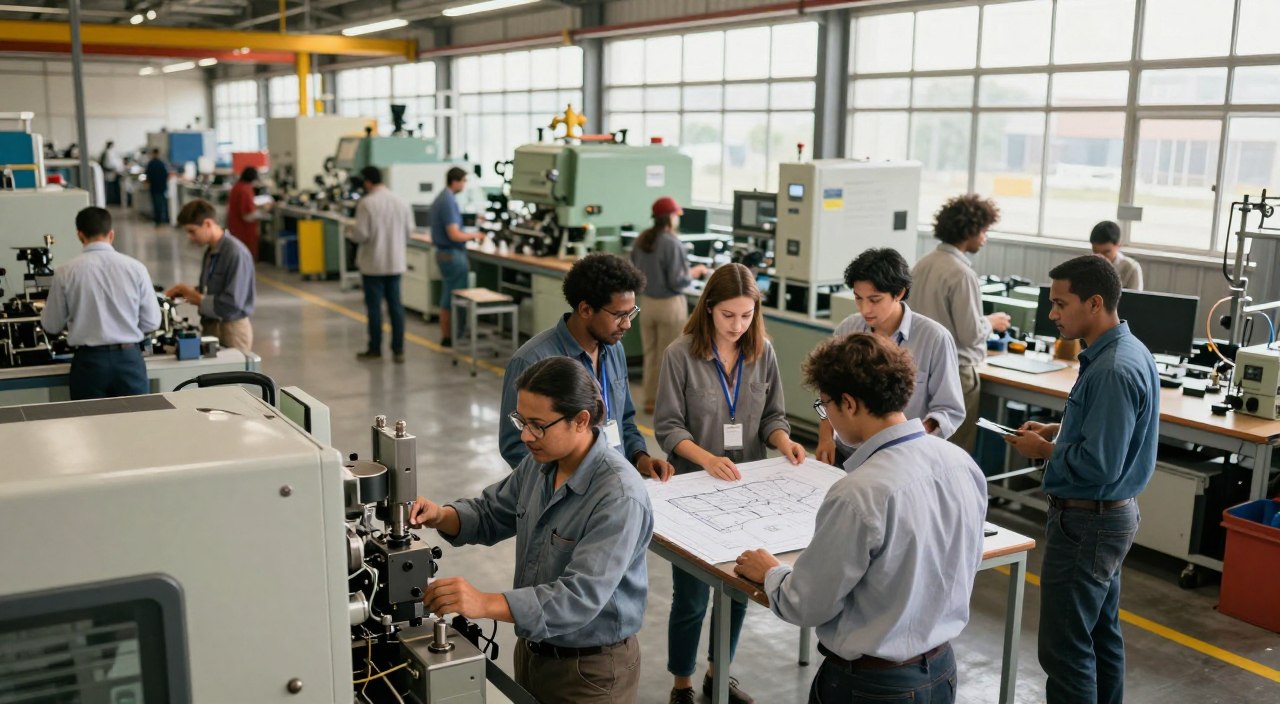
The U.S. is on the verge of a big economic change. The manufacturing sector is set to grow a lot in 2026. This growth is thanks to new technology and more investments, which will create jobs and help the economy grow.
This renewed focus on industrial innovation will benefit you. The U.S. is becoming the second-largest manufacturing hub in the world. With more companies moving back to the U.S. and government support, a manufacturing boom is coming. This boom will create jobs and boost local economies.
The State of American Manufacturing in 2026
Exploring American manufacturing today shows a changed landscape. It’s been shaped by new tech and economic shifts. The sector now employs 12.8 million workers, making up 8% of the nonfarm workforce, as FRED.stlouisfed.org reports.
Current Manufacturing Landscape
The manufacturing scene today faces both hurdles and chances. It has seen a decline from its 1970s peak. Yet, recent trends suggest a comeback, thanks to tech and government support.
Key Statistics and Trends
There’s a lot of growth on the horizon for American manufacturing. A 30% growth is forecasted, promising big changes. Keep an eye on these trends:
- Increased adoption of automation technologies
- Growth in regional manufacturing hubs
- Rise in reshoring and nearshoring activities
Regional Manufacturing Hubs
Across the U.S., new manufacturing centers are popping up. They’re fueled by skilled labor, good transport links, and business-friendly settings.
Knowing about these hubs and the broader manufacturing trends is key. It helps businesses tap into the sector’s rebound.
Why the Manufacturing Resurgence Is Happening Now
As we move past the pandemic, a new wave of manufacturing is starting. This is thanks to important economic factors. The world’s economy is changing, and making things is key to getting back on track.
Economic Drivers Behind the Shift
Two main things are pushing this change: fixing supply chains after the pandemic and government support.
Post-Pandemic Supply Chain Recalibration
The pandemic showed us how weak global supply chains were. Companies are now looking to change this by:
- Investing more in making things at home
- Choosing to make things closer to home, like in Mexico, because of good trade deals
- Working on making supply chains stronger and more flexible
Government Policy Initiatives
Government actions are also helping manufacturing grow. For example, the Ontario government has started programs like the Ontario Together Trade Fund. These efforts help protect jobs and support businesses.
These economic and government efforts work together. They are pushing the manufacturing resurgence forward. This gives businesses a chance to grow and expand.
Identifying Your Opportunities in the Manufacturing Boom
To make the most of the manufacturing boom, you need a smart plan. Look at the market and find where you can grow. This will help you grab the chances that come with the boom.
Assessing Market Gaps
It’s key to know what the market wants and who you’re up against. Companies like Excel Dryer have moved back to the US. This shows a move towards making things at home, opening up new chances for businesses.
Demand Analysis Tools
Using demand analysis tools can show you what the market needs. These tools help you:
- Understand what people want
- Predict how much they’ll need
- Change your production to meet demand
Competitive Landscape Mapping
Seeing the competitive landscape helps you get a clear view of the market. This means:
- Finding out who your main rivals are
- Seeing how much of the market they have
- Finding ways to stand out
By using these methods, you can find chances in the manufacturing boom. The move towards automation in factories also offers new ways to grow. As you explore this area, think about how your business can benefit from these trends.
Step 1: Developing Your Manufacturing Business Plan
Creating a business plan tailored to manufacturing is the first step. The 2025 Reshoring Survey shows 43% of contract manufacturers have reshored work. This is a big change in the industry.
To make a manufacturing business plan, focus on key areas for success.
Creating a Manufacturing-Specific Business Model
A business model specific to manufacturing is key. It helps you understand your market, competition, and what makes you unique.
Financial Projections Templates
Accurate financial projections are essential for funding and decision-making. Use templates to predict revenue, expenses, and cash flow. This creates a solid financial plan that meets your goals.
| Financial Metric | Year 1 | Year 2 | Year 3 |
|---|---|---|---|
| Revenue | $1,000,000 | $1,200,000 | $1,500,000 |
| Expenses | $800,000 | $900,000 | $1,000,000 |
Operational Framework Design
Designing an operational framework is about outlining your manufacturing structure and processes. This includes managing your supply chain, production workflows, and quality control.
“The key to successful manufacturing lies in the ability to adapt and innovate within your operational framework.”
By focusing on these key elements, you can create a detailed manufacturing business plan. This plan will help your company succeed in the growing reshoring market.
Step 2: Securing Funding for Manufacturing Expansion
Expanding your manufacturing needs smart financial planning. Look into government incentives and grants. Getting the right funding is key to success.
Government Incentives and Programs
Government incentives are vital for growing your manufacturing. They help lower the cost of expansion. This makes it easier for businesses to grow.
Federal Manufacturing Grants
Federal grants help businesses expand. For example, the government gives money for big investments. The Ontario government added $600 million to the Invest Ontario Fund.
State-Level Tax Benefits
State tax benefits also help. They vary by state but offer savings. Benefits include tax credits for jobs, equipment, and research.
| Funding Option | Description | Potential Benefits |
|---|---|---|
| Federal Manufacturing Grants | Grants provided by the federal government to support manufacturing expansion | Financial support for expansion projects |
| State-Level Tax Benefits | Tax incentives offered by individual states to encourage manufacturing growth | Reduced tax liability, improved cash flow |
| Invest Ontario Fund | A fund established by the Ontario government to support major investments | $600 million allocated for strategic investments |
Use government incentives and programs to fund your expansion. It’s important to check out all options and understand how to apply. This way, you can get the most benefits.
Step 3: Leveraging Nearshoring to Mexico for Competitive Advantage
The manufacturing scene is changing in 2026, and nearshoring to Mexico is worth exploring. This move can help you improve your manufacturing setup. Working with Mexican manufacturers can bring big benefits.
Benefits of Mexico as a Manufacturing Partner
Mexico is becoming a top choice for U.S. companies looking to make things. It offers great cost and logistical perks. Knowing these benefits can help you choose the best path for your manufacturing.
Cost Comparison Analysis
One big plus of nearshoring to Mexico is saving money. A cost comparison shows Mexico’s labor costs are lower than in the U.S. but quality is not sacrificed. Mexico’s labor costs are also lower than many Asian countries, making it great for tasks that need a lot of hands.
- Lower labor costs compared to the U.S.
- Competitive costs for raw materials and components
- Reduced transportation costs due to proximity to the U.S. market
Logistical Advantages
Nearshoring to Mexico also makes your manufacturing smoother. Being close to the U.S. cuts down on shipping times and costs. This means you can deliver products just in time and have a stronger supply chain.
“Mexico’s strategic location and well-developed transportation infrastructure make it an ideal location for manufacturing operations serving the U.S. market.”
By choosing nearshoring to Mexico, you can use these logistical perks to boost your manufacturing’s efficiency. This will help you meet market needs better.
Step 4: Building Your Skilled Manufacturing Workforce
As you navigate the manufacturing resurgence of 2026, building a skilled workforce is key. The demand for skilled workers, like welders, is growing. Companies must invest in their workforce to stay ahead.
Meeting the Skilled Welder Demand
The manufacturing industry is facing a big challenge in finding skilled welders. The Manufacturing Institute and Deloitte say 1.9 million manufacturing jobs could go unfilled by 2033. This shows the need for good workforce development strategies.
Training Program Development
To meet the skilled welder demand, focus on developing detailed training programs. These programs should include:
- Hands-on training with modern welding equipment
- Theoretical foundations in welding techniques and safety protocols
- Mentorship opportunities with experienced welders
By investing in these training programs, you can make sure your workforce has the skills needed. This will help drive your manufacturing operations forward.
Certification and Qualification Standards
It’s important to follow certification and qualification standards for a skilled workforce. This includes:
- Ensuring welders are certified according to industry standards
- Regularly updating training programs to reflect the latest technologies and techniques
- Implementing qualification standards for welding inspectors and supervisors
By keeping high certification and qualification standards, you can make sure your manufacturing operations are efficient and safe.
Building a skilled manufacturing workforce is a critical step in capitalizing on the manufacturing resurgence. By focusing on training program development and adhering to certification standards, you can ensure your business has the talent needed for growth and success.
Step 5: Implementing Automation in Your Factory
Adding automation to your factory can really boost efficiency and productivity. As manufacturing changes, using automation technologies is key to staying ahead.
Selecting the Right Automation Technologies
Choosing the right automation for your factory is important. First, look at your current operations. Then, find out where automation can make the biggest difference.
- Evaluate your production processes to determine where automation can improve efficiency.
- Consider the types of automation technologies available, such as robotics and machine learning.
- Assess the compatibility of new automation technologies with your existing infrastructure.
ROI Assessment Models
Doing a detailed ROI assessment is vital when investing in automation. It helps you see if the investment will pay off financially.
- Calculate the initial investment costs for the automation technology.
- Estimate the possible savings and productivity gains.
- Compare the ROI of different automation solutions to make an informed decision.
Vendor Selection Criteria
Picking the right vendor for your automation needs is as important as choosing the technology. Look at these criteria when checking out vendors:
- Experience and expertise in providing automation solutions for manufacturing.
- The quality of customer support and service offerings.
- Compatibility of their technologies with your existing systems.
By picking the best automation technologies and vendors, you can make your factory more productive and competitive.
Step 6: Developing a Resilient Supply Chain
As you face the challenges of manufacturing in 2026, building a strong supply chain is key. A resilient supply chain helps your business handle disruptions well. It keeps production going and meets customer needs.
Domestic Sourcing Strategies
Using local suppliers is a smart way to make your supply chain stronger. Sourcing materials and parts close to home reduces risks from global chains. Many companies are now choosing local suppliers to boost their supply chain’s strength.
Supplier Qualification Process
It’s important to carefully choose your suppliers. You need to check if they are reliable, meet quality standards, and can handle your needs. This way, you build a trusted network of suppliers for your operations.
Inventory Management Systems
Advanced inventory systems are also essential. They let you keep an eye on stock levels and adjust them as needed. With technology, your supply chain can be more agile and quick to respond.
By focusing on local suppliers, a strict supplier selection, and using inventory systems, you can create a strong supply chain. This will help your manufacturing business succeed in the long run.
Step 7: Adopting Smart Manufacturing Technologies
To stay ahead, you must use smart manufacturing technologies. The U.S. manufacturing sector is using IoT and data analytics to innovate. This is shown in the latest trends from IMTS 2026.
Essential Digital Transformation Tools
Digital transformation is key for modern manufacturing. It means using new technologies to make operations more efficient and competitive.
IoT Implementation Guide
IoT technology can greatly improve your manufacturing. First, find areas where real-time data can help make better decisions. Then, buy IoT devices to monitor and control your machines. Make sure your team knows how to use IoT data.
Data Analytics Platforms
Data analytics platforms are essential for understanding big data in smart manufacturing. They help predict maintenance, optimize schedules, and improve quality. When picking a platform, look for scalability, ease of use, and integration with your systems.
Using these smart manufacturing tools can boost your efficiency, cut costs, and enhance product quality. Start with a solid plan and be ready to update as new tech comes along.
Step 8: Navigating Regulatory Compliance
Following regulatory compliance is not just a must; it’s a key to success in the competitive world of manufacturing. As you grow your operations, knowing and following the rules is essential.
Understanding Manufacturing Regulations
Manufacturing rules cover a wide range of needs, from specific industry standards to environmental laws. Companies must follow these to stay out of trouble and keep a good name.
Industry-Specific Compliance Requirements
Each manufacturing field has its own set of rules. For example, food makers must follow strict cleanliness and safety rules. Car makers have to meet certain quality and safety standards.
Environmental Standards
Environmental rules are a big part of manufacturing laws. Companies must cut down their impact on the environment. This includes rules on emissions, waste, and energy use.
By knowing and following these rules, you can make sure your operations are up to par and competitive.
Step 9: Marketing Your Manufacturing Capabilities
As we move into 2026, marketing your manufacturing skills is key. It helps draw in new customers and partners. In today’s competitive world, showing off what you can do can really boost your business.
Developing Your Manufacturing Brand
Building a strong manufacturing brand is the first step. It’s not just about a logo or slogan. It’s about sharing what makes you special and why you stand out.
Value Proposition Development
Your value proposition tells customers what you offer that’s unique. To craft a strong one, know what your customers need and how you can meet those needs.
Industry Positioning Strategies
Positioning your business in the industry means finding your niche. You can stand out by focusing on tech, quality, or customer service.
| Marketing Strategy | Description | Benefits |
|---|---|---|
| Digital Marketing | Using online platforms to promote your skills. | More visibility, reach the right customers. |
| Content Marketing | Sharing valuable content to show your expertise. | Builds trust, attracts new customers. |
| Trade Shows and Events | Showing off your products and skills at events. | Meet people face-to-face, network. |
For more on the future of manufacturing, check out Deloitte’s insights.
Case Studies: Manufacturing Resurgence Success Stories
The manufacturing sector has seen a big comeback in recent years. Many companies have found success through smart planning and adapting. By looking at their stories, you can learn a lot about how to grow and change.
Small Business Transformation Examples
Excel Dryer is a great example of a small business that made a big change. They moved their operations back to the US, which improved their product quality and brought new ideas. This shows how companies can thrive by adjusting to market changes and finding new chances.
Looking at these success stories, we see some key factors. These include:
- Strategic planning and adapting to market changes
- Investing in new technology and innovation
- Building a skilled team
Lessons Learned
By studying these examples, you can learn important lessons for your business. For example, being flexible and quick to respond to market changes is key. Also, knowing how government support can help manufacturing grow is useful.
As you face the challenges of the manufacturing resurgence, using these insights can help you succeed. It can help you reach your business goals.
Overcoming Common Manufacturing Growth Challenges
As you navigate the manufacturing resurgence of 2026, overcoming growth challenges is key for lasting success. One big hurdle is filling skill gaps in your workforce.
Addressing Skill Gaps
The manufacturing sector is set to face a big skills gap. By 2033, 1.9 million jobs might go unfilled. To tackle this, businesses can use two main strategies: educational partnerships and internal training.
Educational Partnership Models
Educational partnerships help manufacturers work with schools to create curricula that fit industry needs. This ensures a steady flow of skilled workers. It also helps in making training programs specific to manufacturing needs.
Internal Training Programs
Internal training is key for upskilling current employees. By investing in ongoing learning, manufacturers boost productivity. They also keep up with new technologies.
By tackling skill gaps with these methods, manufacturers can overcome a major challenge. They can then thrive in a competitive market.
Measuring Your Manufacturing Success
To gauge your manufacturing success, it’s key to watch key performance indicators. These show how well your production is running.
Production Efficiency Metrics
Production efficiency is a big deal in making things. Companies use metrics like OEE to see how well they’re doing.
OEE (Overall Equipment Effectiveness)
OEE looks at how well your equipment works. It checks if it’s available, performing well, and making quality products.
Throughput and Cycle Time
Throughput and cycle time are important too. Throughput is how much you make in a set time. Cycle time is how long it takes to make one thing.
By keeping an eye on these, you can spot problems. Then, you can make your production better. This helps you succeed in making things.
Your Roadmap to Manufacturing Excellence in 2026 and Beyond
The U.S. manufacturing industry is on the verge of a big change. This change comes from new technologies and smart investments. The IMTS 2026 shows the sector is ready for a big growth.
To reach manufacturing excellence, it’s key to know the trends, challenges, and chances in the industry. By using the insights and plans in this guide, businesses can get ready for success in 2026 and later. They can take advantage of the expected 30% growth in manufacturing.
Creating a roadmap for manufacturing excellence means looking at your current abilities, finding areas to get better, and using the latest technologies. This forward-thinking helps you stay ahead, improve productivity, and bring new ideas.
As you move through the changing manufacturing world, work on building a skilled team, using smart manufacturing tech, and making a strong supply chain. This way, you’ll be ready to grab the chances in 2026 and later. It will help your business reach manufacturing excellence.
FAQ
What is driving the manufacturing resurgence in 2026?
The resurgence is due to economic factors like tech advancements, reshoring, and government support. This is expected to lead to a 30% growth.
How can businesses capitalize on the manufacturing boom?
Businesses can tap into the boom by finding market gaps and understanding the competition. They should use demand analysis tools to spot growth opportunities.
What role does nearshoring to Mexico play in the manufacturing resurgence?
Nearshoring to Mexico is gaining popularity for its logistical benefits and cost savings. It’s a key strategy for optimizing manufacturing operations.
How can businesses address the demand for skilled welders and other manufacturing professionals?
To meet the demand, businesses should invest in training programs. They should also follow certification standards and build a skilled workforce.
What is the importance of implementing automation in factories?
Automation is vital for boosting productivity and competitiveness. Companies should choose the right technologies and assess their ROI.
How can businesses develop a resilient supply chain?
To build a resilient supply chain, businesses should adopt domestic sourcing. They should also qualify suppliers well and use inventory management systems.
What are the benefits of adopting smart manufacturing technologies?
Smart technologies, like IoT and data analytics, improve efficiency and competitiveness. They are key for operational success.
How can businesses measure their manufacturing success?
Success can be measured by tracking metrics like OEE, throughput, and cycle time. These show production efficiency.
What are the key challenges in manufacturing growth, and how can they be overcome?
Challenges include skill gaps. These can be addressed by investing in workforce development. Educational partnerships and internal training are also helpful.